
Redefining the A4 Multifunction Printer
Through Radical Compactness
Project
BP-C131WD A4 Color Multifunction Printer
Member
-
Takayuki Tsutsui
Product Designer
-
Atsushi Kaseno
Design Team Leader
-
Kenichi Yasuda
UX/UI Designer
-
Noriaki Taguchi
Product Manager
About the BP-C131WD A4 Color Multifunction Printer
The BP-C131WD is Sharp’s first compact A4 color multifunction printer designed specifically for the entry-level market and developed in-house.
As demand grew for more accessible printing and copying solutions, a key gap remained in Sharp’s product line: an A4 multifunction printer developed in-house. Without one, Sharp was often excluded from consideration altogether. This was particularly true in North America, where local sales teams had advocated for such a product for years.
Yet the compact A4 multifunction printer market was already highly competitive and mature. To succeed, the project required more than incremental improvement. The goal was clear: create an exceptionally compact product capable of competing at the highest level. Achieving that goal, however, demanded a fundamental rethinking of long-held assumptions. This is the story of the decisions that made it possible. Reflecting on the project, Tsutsui, the product designer, recalls:
I was genuinely excited. It meant we were aiming for the very top.
— Tsutsui
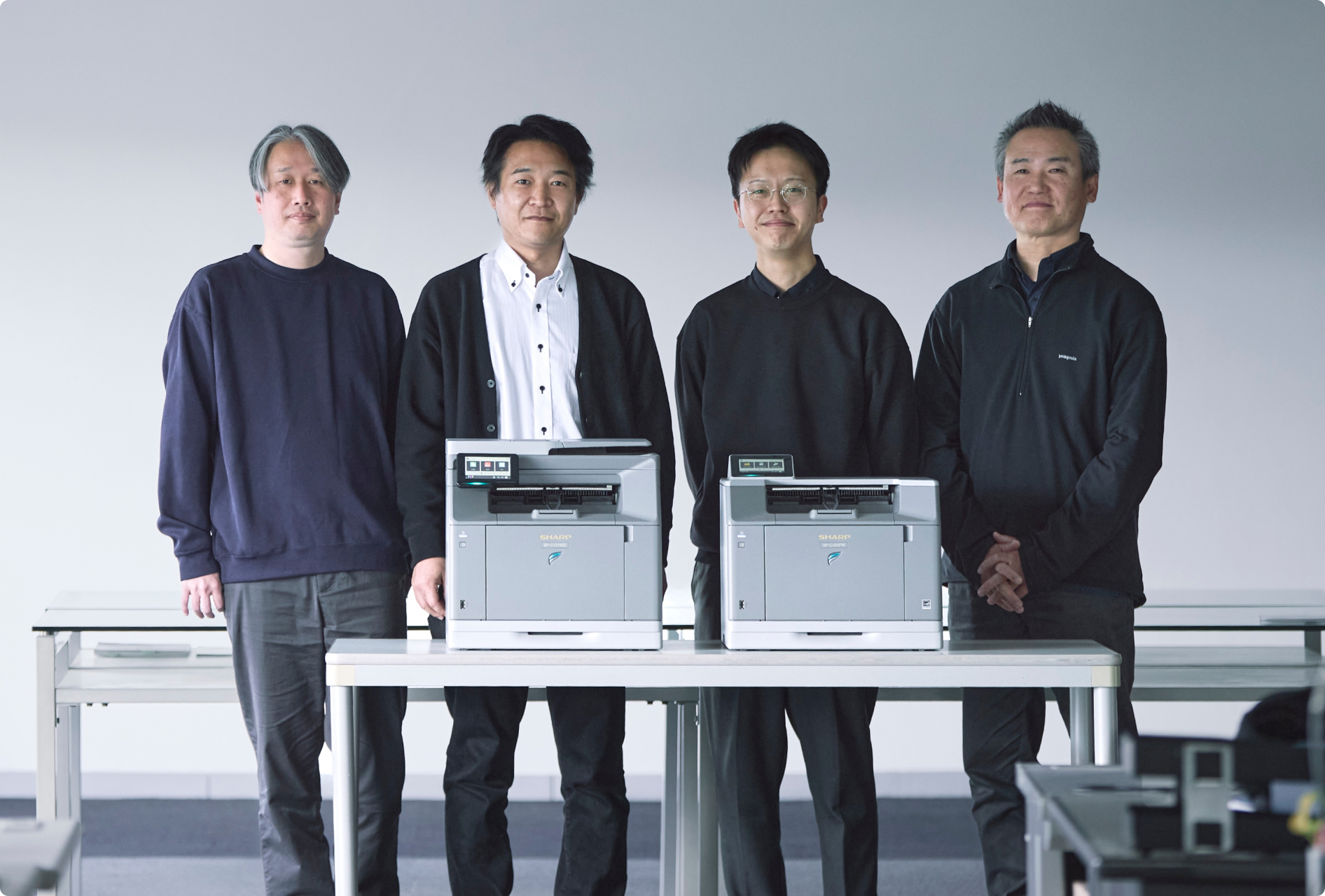
BP-C131WD project team
From left:Yasuda, Taguchi, Tsutsui, and Kaseno.
The starting point
The goal was clear, but the path to achieving it was not. Taguchi, the product manager, explains the motivation behind the project:
There had long been demand for an A4 product in the entry-level segment.
Historically, Sharp developed lower-end multifunction printers by adapting higher-end platforms and reducing functionality. While efficient, that approach imposed limits. As long as the fundamental architecture remained unchanged, there was only so much that size and cost could be reduced.
Our conventional development approach resulted in products that were too large and too expensive. We realized we couldn’t compete that way.
Meanwhile, Sharp’s competitors approached the market from a fundamentally different starting point. Rather than scaling down larger multifunction devices, they expanded single-function printers by adding features. The result was a lighter structure and significantly lower costs.
Sharp’s established design philosophy simply wasn’t suited to this market.

Noriaki Taguchi
Product Manager
Responsible for the chassis structure and overall project leadership, Taguchi drew on years of experience with previous A4 development programs to guide critical architectural decisions.
Rethinking the fundamentals
The original plan called for adapting the standard engine used in higher-end models, but that decision immediately limited how compact the product could become. The team made a bold choice: instead of modifying an existing engine, they developed an entirely new one. A dedicated compact engine designed specifically for this product. The decision sacrificed development efficiency in favor of achieving the project’s ultimate goal. Tsutsui reflects on this pivot:
We completely reworked the engine. The focus shifted toward creating a truly compact architecture.
For Kaseno, the design team leader, the decision was striking.
When I heard they were redesigning the engine from the ground up, it came as a huge surprise from a design perspective.
The redesign extended beyond the engine itself. The team also reconsidered the paper output direction.
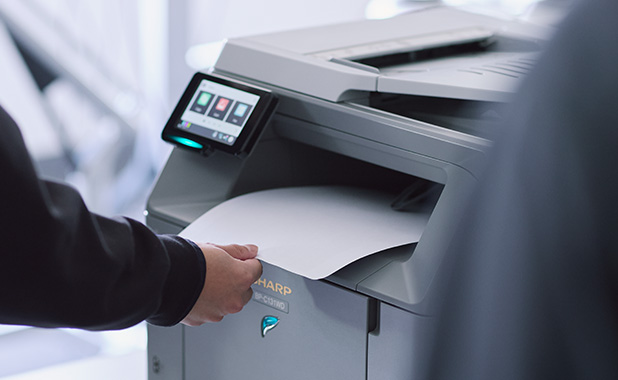
Traditionally, Sharp multifunction printers ejected paper horizontally, requiring additional clearance along both the front and side of the machine. By redirecting output toward the front, previously unused space could be incorporated into the internal layout.
Changing the paper output direction was one of the key factors that enabled us to achieve this size.
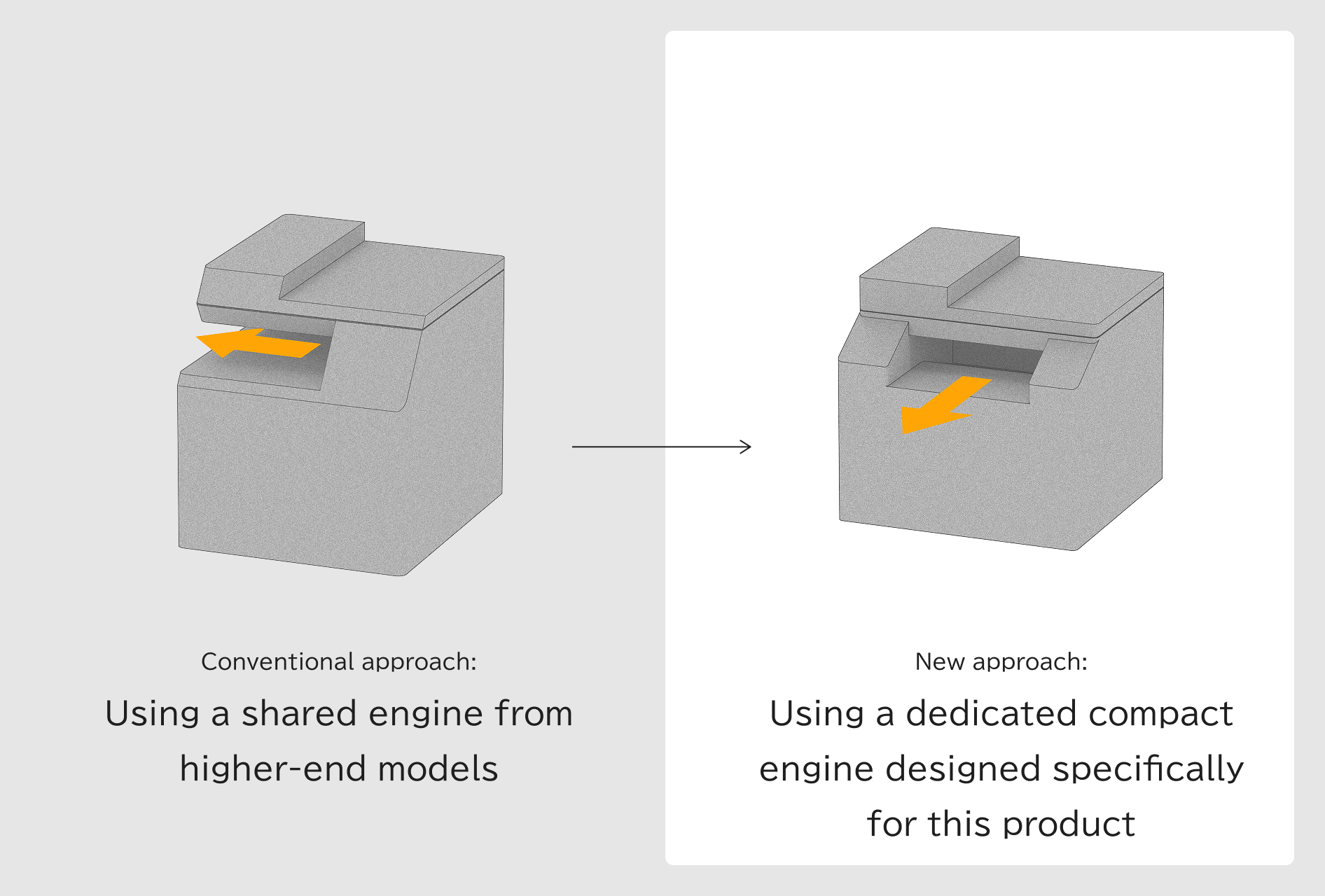
Together with the redesigned paper path, the result was a dramatically smaller footprint.
Yet changing the architecture affected virtually every aspect of operation.
The internal units were rotated by 90 degrees. Consumables were now replaced from the right side.
Naturally, concerns emerged throughout the organization. Taguchi recalls the reactions at the time:
Changing the orientation changes everything: installation, maintenance, consumable replacement, paper jam recovery. Is that really acceptable?
Taguchi addressed each concern individually.
Because the machine is compact and lightweight, users can easily rotate it when servicing components. To accommodate such movement, we replaced the conventional rubber feet with felt pads that provide stability while making repositioning easier. We explained these decisions carefully to both sales teams and overseas stakeholders, and gradually gained their support.
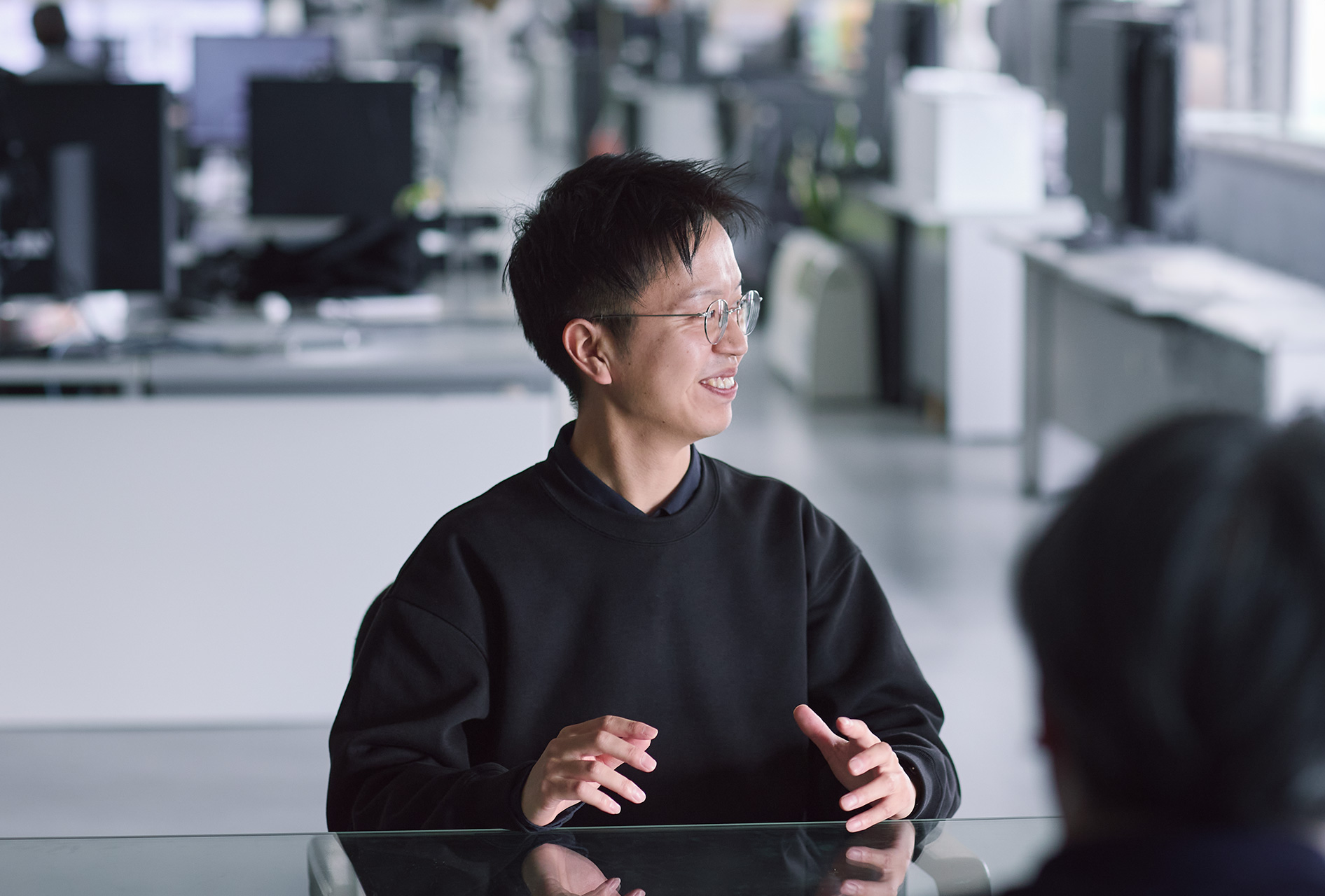
Takayuki Tsutsui
Product Designer
Working closely with engineering teams, Tsutsui helped shape everything from the structural framework to the paper output area, balancing usability with structural integrity.
Building consensus
Every time a fundamental assumption changed, stakeholder understanding had to be earned again. Hundreds of people were involved in the project, and not everyone shared the same starting point. Kaseno describes the role design played in bringing people together:
The visual aspects of design give people something tangible to align around. It establishes a clear goal that everyone can visualize.
The mock-up became a powerful tool for building consensus. Taguchi had experienced its impact many times before.
People forget things surprisingly quickly. Screens and presentations only go so far. But the moment you place a physical mock-up in front of people, the conversation changes immediately.
The same philosophy guided the UI development process. According to Yasuda:
We started with an early version, tested it repeatedly, refined it, and then repeated the process. That approach shaped the project from day one.
The mock-up became a tool for making consensus visible.
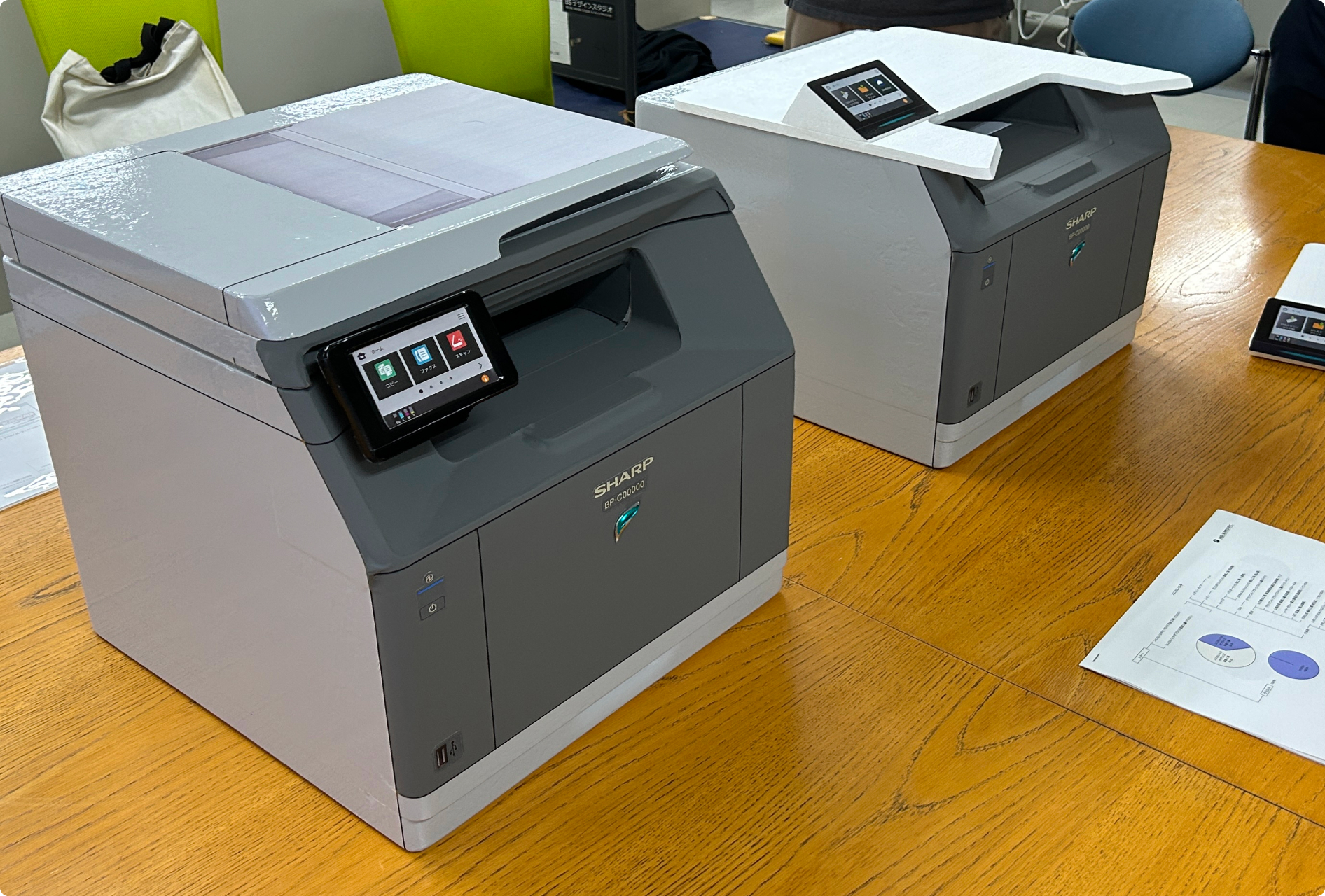
Mock-up used during internal reviews
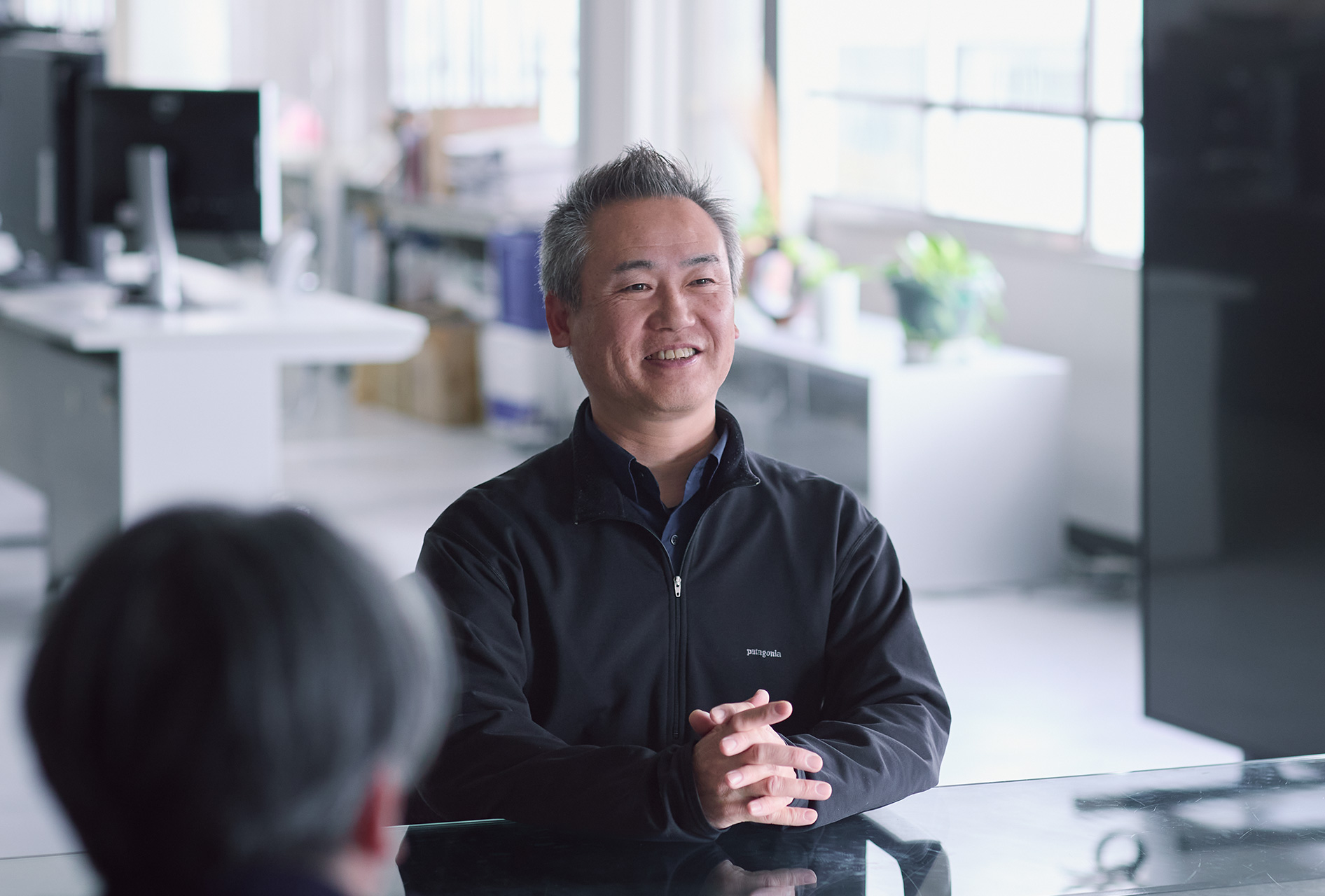
Atsushi Kaseno
Design Team Leader
Kaseno oversaw the overall design strategy and worked closely with engineers to align the product direction as the architecture evolved.
Designing within constraints
The drive toward miniaturization also imposed major constraints on the user interface. The display was reduced from 10.1 inches to just 4 inches, but the existing interface could not simply be scaled down.
At the same time, users familiar with higher-end models needed to feel immediately comfortable operating the new product. The challenge was not reducing information, but rather restructuring the experience to work on a 4-inch display while maintaining consistency.
Yasuda describes the difficulty of this task:
Identifying and reorganizing what was truly necessary took a considerable amount of time.
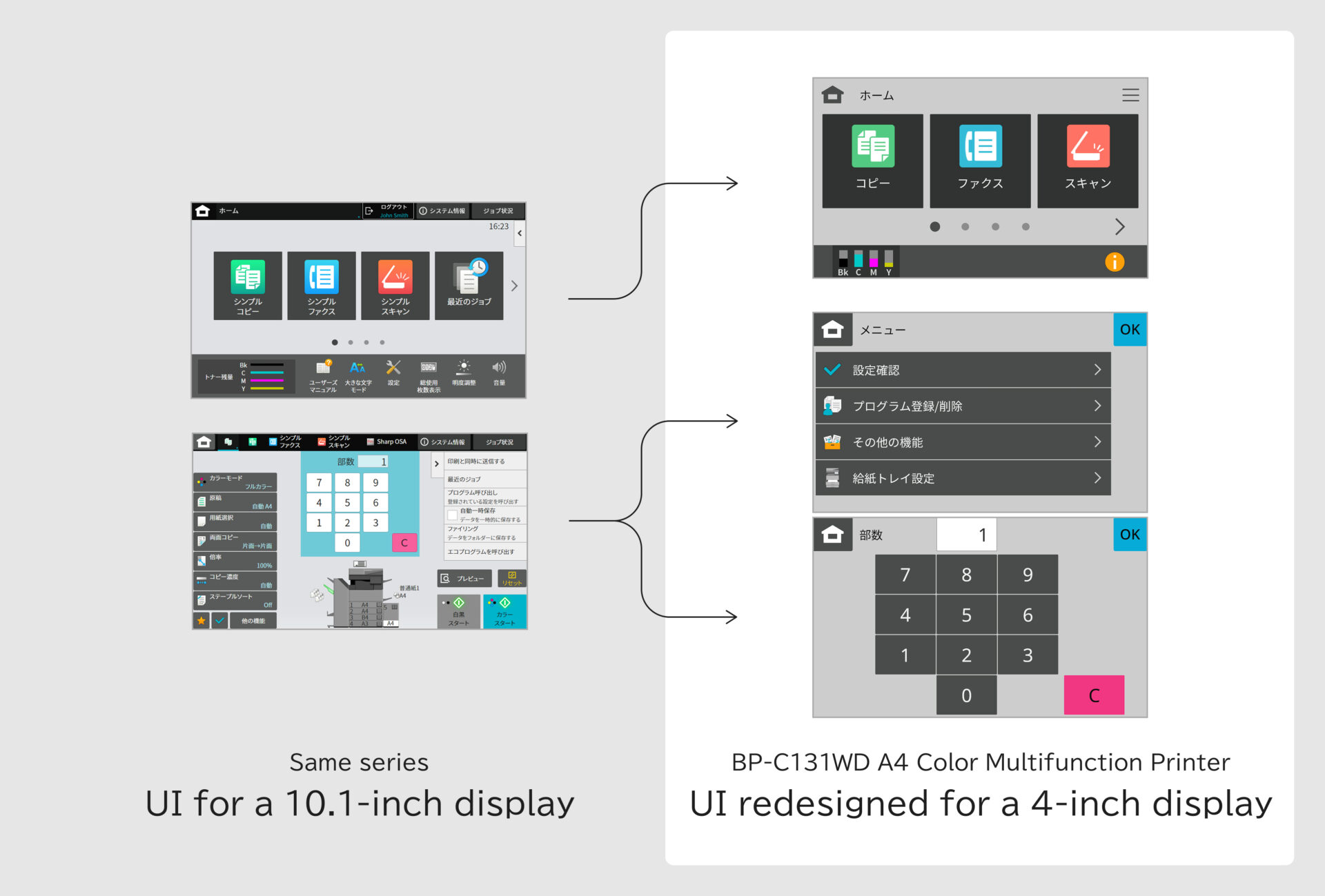
An interface originally created for a 10.1-inch display was completely restructured for a 4-inch screen while preserving operational consistency.
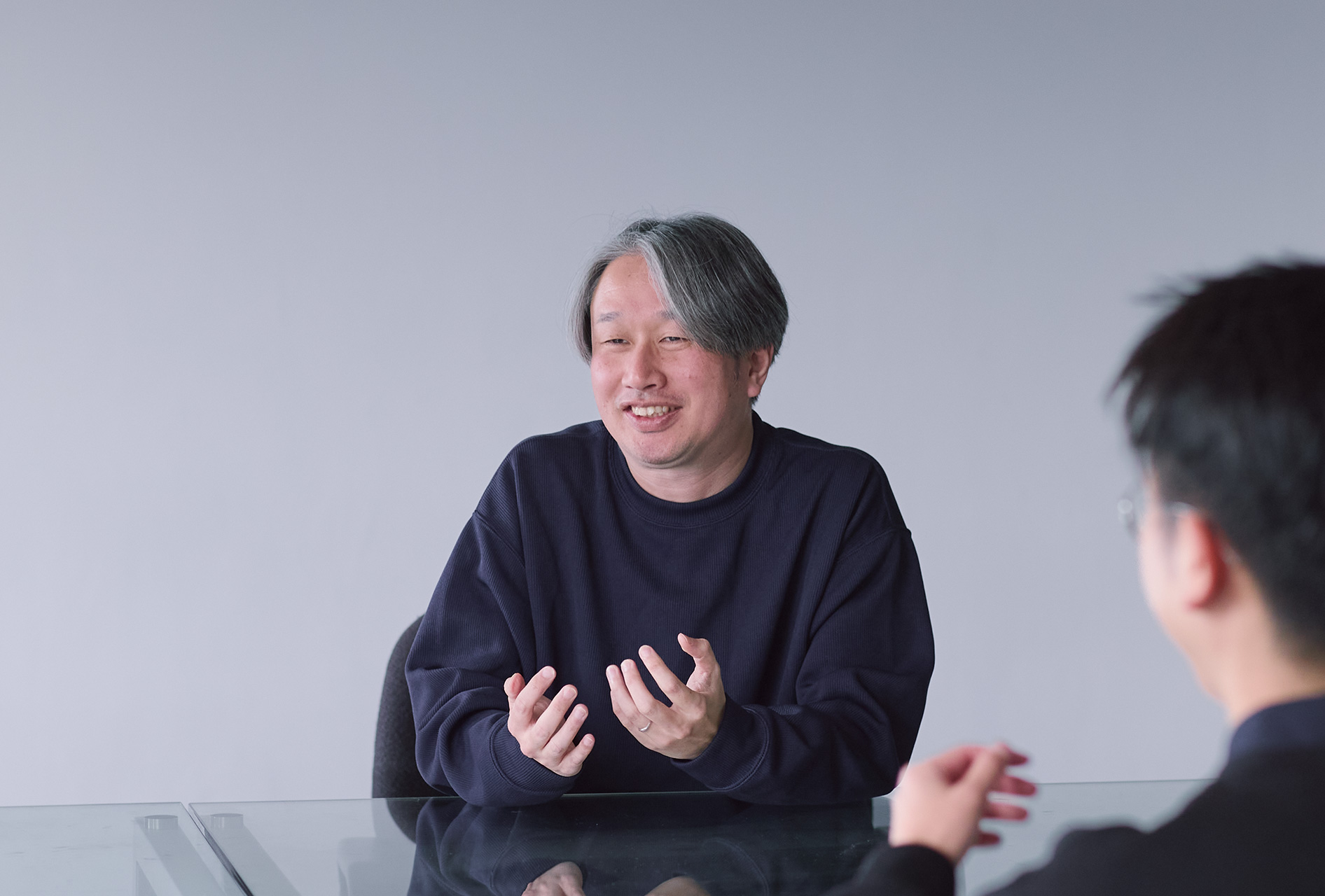
Kenichi Yasuda
UX/UI Designer
Working within the limitations of a compact display, Yasuda redesigned both the screen architecture and button layout while maintaining continuity with higher-end models.
The design team’s role extended far beyond the interface and exterior appearance. Once the engine redesign was approved, Tsutsui became deeply involved in the overall product architecture, including control panel positioning, internal unit placement, and paper output design. Even for him, it was a new experience.
It was the first time I had been involved from the earliest stages of structural design.
Design helped transform technical challenges into tangible experiences, allowing the conversation to move beyond engineering constraints and toward user value.
Turning an idea into a viable product
Achieving compactness alone would not guarantee success. The product also had to meet the realities of the market.
Manufacturing was moved to Thailand. Local procurement reduced costs. Component structures were simplified, with some assemblies consolidated from five parts into one. More than half of the external housing was produced using recycled plastics. While recycled materials increased costs, environmental responsibility remained a priority.
Countless incremental decisions made the larger transformation possible. Sharp multifunction printers have long been recognized with prestigious design awards, and that legacy carried weight for Tsutsui.
There was real pressure to ensure this product upheld the standards people expect from Sharp.
The final product went on to receive both the Good Design Award and the iF Design Award.
Meeting every challenge with optimism
At the conclusion of the interview, the team was asked what they learned from a project defined by ambitious goals and constant constraints.
Tsutsui answered:
Turn constraints into opportunities. Never approach a project with a negative mindset.
Challenge after challenge emerged throughout development. Rather than treating those challenges as obstacles, Tsutsui transformed them into drivers of design innovation. As a designer involved from the earliest stages, he continually helped shape the project’s direction.
Taguchi:
Just try it. Remain open rather than rejecting ideas immediately.
The challenge of designing one of the world’s most compact multifunction printers began with that very mindset.
Kaseno:
When you embrace the diversity of perspectives that comes with a project involving hundreds of people, entirely new possibilities emerge.
Yasuda:
Progress came through repeatedly giving form to ideas, testing them, and refining them.
How far can we challenge assumptions when conventional approaches no longer work? By meeting complexity with optimism and viewing constraints as opportunities, Sharp continues to expand what is possible, creating products that broaden choice and enrich everyday life.
Recommend
-
Reimagining the Washing Machine through Steel to Transform an Ideal Vision Into a Product Designed for Everyday Living
ES-8XS1 Compact Drum Washer/Dryer
- Product
-
Opening a dialog with society to discover and define new value
todokuto
sanitary product dispenser- UX
- Product
- Communication