Opening a dialog with society
to discover and define new value
Project
todokuto
sanitary product dispenser
Member
-
Ning Jing
Project Lead and UX Designer
-

Marina Yamamoto
Project Promotion
-
Sayami Ejiri
Product Designer
-
Natsumi Onodera
UX/UI Designer
What is todokuto?
A sanitary product dispenser designed for public spaces, from schools and municipal facilities to corporate workplaces, todokuto enables people to access essential products whenever they need them. Yet the experience extends far beyond the end user. The project also considers those who choose to introduce the system, those responsible for maintaining it, and those working to promote its adoption. Every aspect of the product was designed with each of these perspectives in mind. At its heart, however, todokuto is more than a product; it’s an attempt to give form to a social need and to the feelings surrounding it. That intention is embedded in the name todokuto itself.
How do you design for issues society has yet to fully articulate? How deeply should designers engage in shaping decisions? This project began with a personal sense of discomfort and awareness, evolved through an unexpected encounter with local government officials, and continued to take shape through ongoing dialog with society itself. The value was defined before the product was complete, as the team sought to give shape to needs before they had fully taken form. In many ways, todokuto is a record of that process.
I’m still not sure.
— Ning
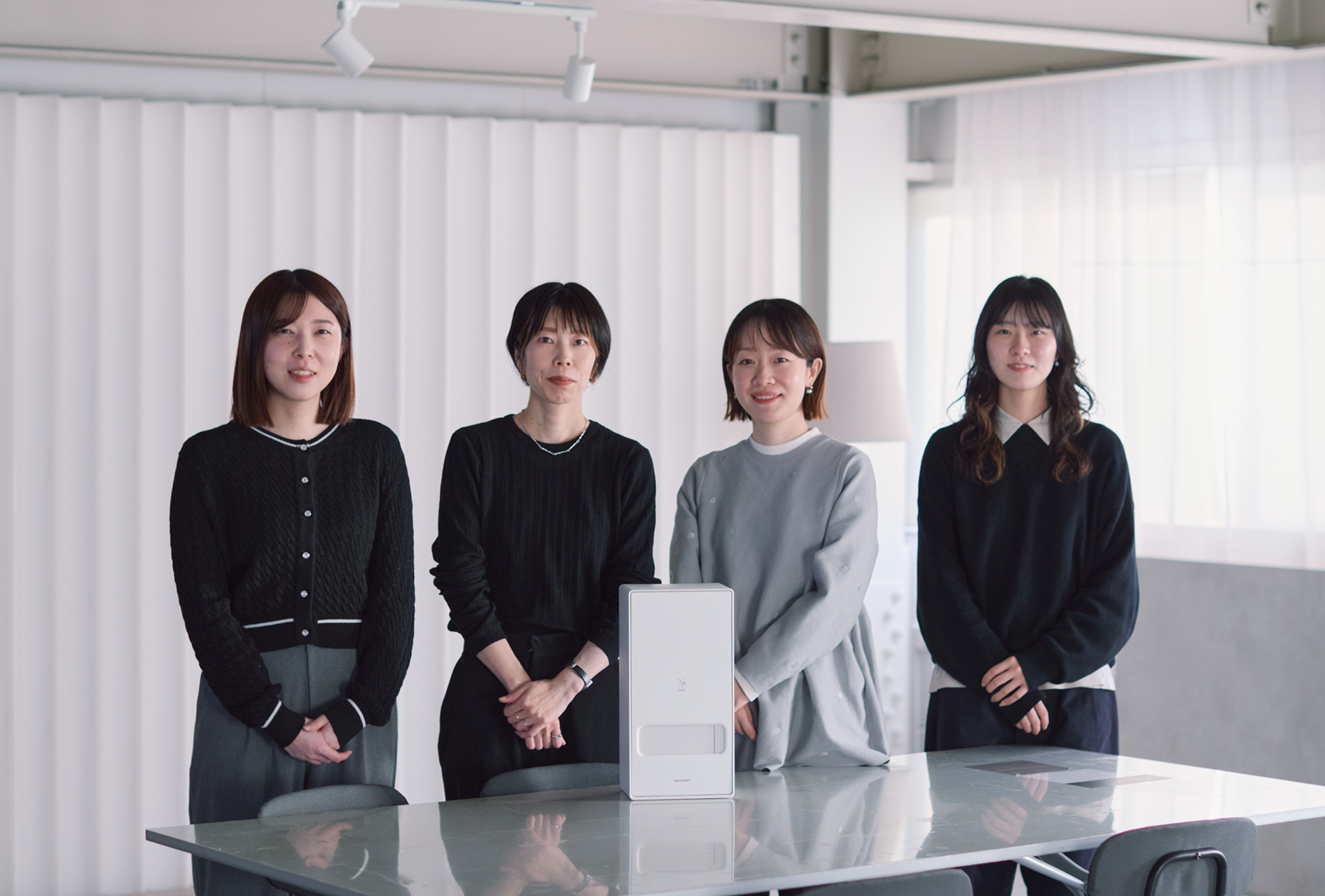
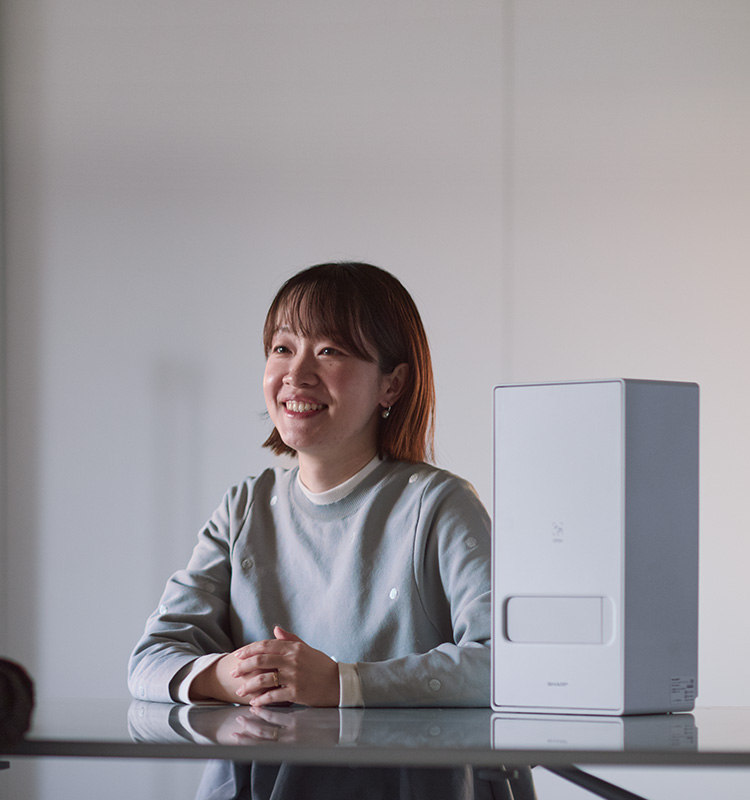
The todokuto project team
From left:Onodera, Ejiri, Ning, and Yamamoto.
At first, there wasn’t even a recognized “need.”
When asked what sparked the project, project lead Ning offered an unexpected answer.
It wasn’t that I personally felt inconvenienced. I kept questioning whether the things we accepted as normal really should be considered normal at all.
Products related to women’s health already existed in abundance. Yet issues surrounding menstruation were still widely treated as deeply personal matters, difficult to discuss openly and expected to be managed individually rather than addressed collectively as part of society. What Ning felt was not a clearly defined need, but an unspoken discomfort that had yet to be acknowledged.
Her original idea was a personal product for organizing and storing sanitary products at home.

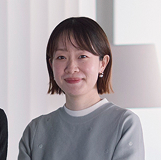
Ning Jing
Drawing on her expertise as a UX designer, she led the todokuto project from concept to realization.
Setting out from unspoken feelings of discomfort, she helped shape the project’s vision and values.
One unexpected phone call connected the idea to society.
The turning point came from outside SHARP.
After reading an article about SHARP’s work in femtech, the City of Hamamatsu contacted us directly. Out of nowhere, they asked whether we could create a dispenser for sanitary products.
It wasn’t a sales inquiry. It was a request from local government.
At first, the team responded that sanitary product dispensers for public restrooms fell outside the scope of their development work.
Even so, they chose to visit Hamamatsu to better understand why the city felt such a system was necessary.
What they discovered was not simply inconvenience experienced by individuals, but operational challenges faced by public facilities themselves.
How should sanitary products be provided in schools and public facilities? Who should manage replenishment? How should awareness be communicated? More than merely personal concerns, these questions were tied to the operation and inclusivity of public spaces.
I believed the project had real value. Even now, though, I still don’t know whether it will ultimately become a business.
Social importance alone cannot sustain a project. Without business viability, the entire endeavor risks dissolving into an exercise of self-satisfaction. The team moved forward while examining policies, subsidies, market trends, and municipal initiatives, guided by possibility instead of certainty.
Once the pilot project launched, inquiries began arriving from companies, universities, public facilities, and organizations beyond Hamamatsu. In no case did SHARP approach the prospective customer first. The organizations themselves reached out because they faced similar challenges.
Reflecting on the process, Yamamoto, who oversaw planning, shared this:
I realized this probably wasn’t an issue unique to Hamamatsu. Similar challenges likely existed in facilities across Japan.
A private sense of discomfort gradually became connected to a broader social issue.

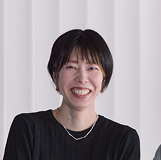
Marina Yamamoto
Working alongside Ning, Marina Yamamoto helped advance the project through dialog with pilot locations, including the City of Hamamatsu, and through user research that brought real-world perspectives into the design process.
From BtoC to BtoB: A shift in design philosophy rather than a change in sales channel
Ning is quick to correct one common misunderstanding.
We didn’t pivot to BtoB because BtoC failed.
The femtech team originally envisioned a personal product for storing and managing sanitary products at home. However, before the BtoC concept had fully materialized, the opportunity to collaborate with City of Hamamatsu emerged, prompting the team to prioritize a dispenser for public facilities.
That shift transformed everything. The users changed. The purchasers changed. The operators changed. Assumptions that applied inside the home no longer applied in a public setting.
The needs were entirely different. The users were different. The decision-makers were different. We reconsidered almost everything from the ground up.
The move into BtoB was never simply about changing distribution channels. It represented a fundamental shift in how value itself would be validated through design.
Choosing to release a prototype as a catalyst for dialog.
The project involved far more stakeholders than the users alone. It also involved the people introducing todokuto into facilities, the people responsible for replenishing it, and those tasked with communicating its purpose internally. Gathering their feedback early was essential.
The prototype was far from perfect. The colors varied, and some areas lacked refinement. The designers felt conflicted about releasing it in that condition.
And yet, they chose to release it. Rather than waiting for perfection, the team viewed the release itself as part of the process of refinement. The prototype was never intended to be merely a test unit. It was designed to initiate dialog with society.
Product designer Ejiri reflected:
I was genuinely excited by the idea of releasing a prototype to the public. In fact, I wish we could approach more products this way.
UX/UI designer Onodera shared a similar reaction.
I had always assumed SHARP products were nearly finalized before being shown publicly. I was surprised to discover that prototypes at this stage could also be released and tested.
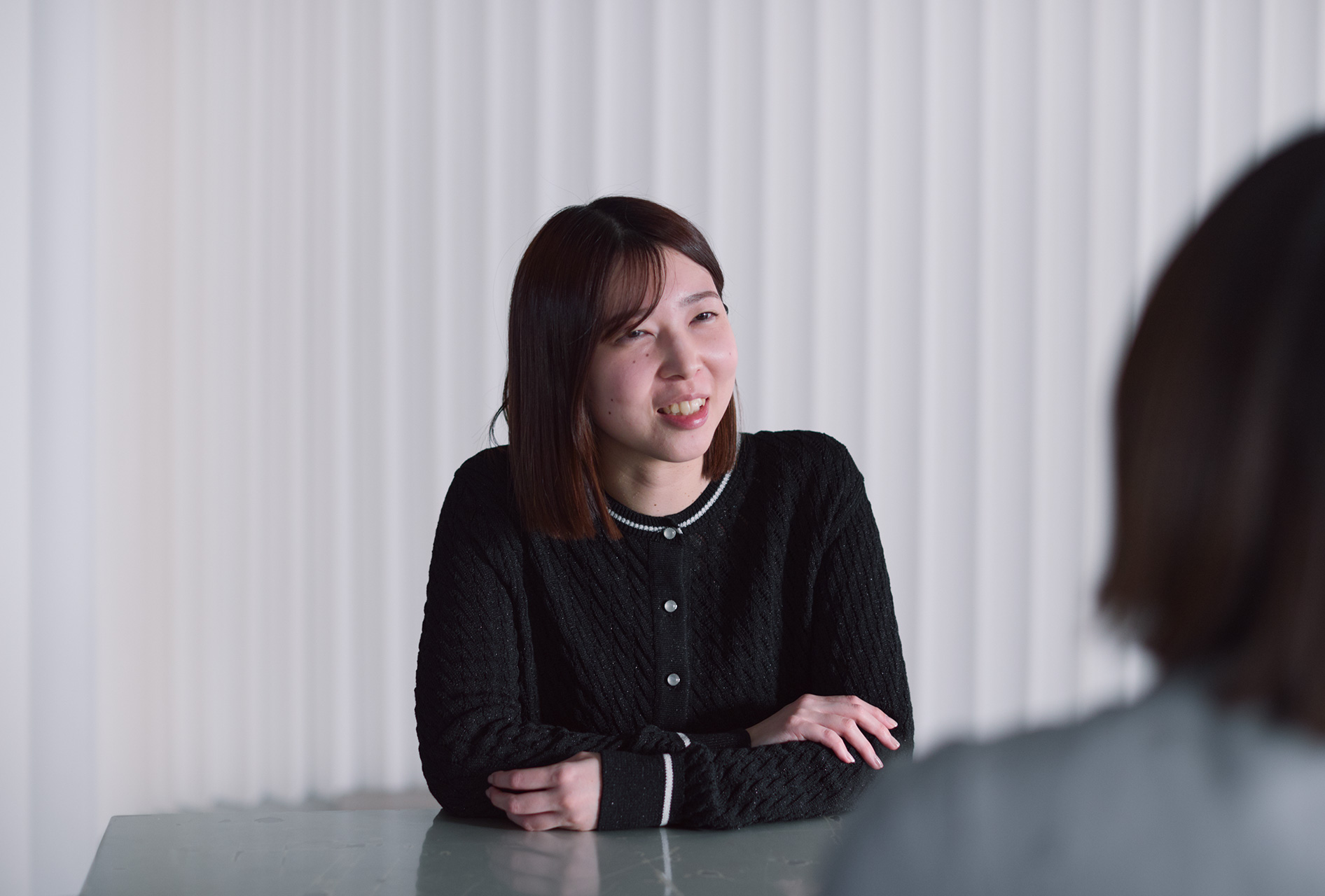
Natsumi Onodera
UX/UI Designer
Natsumi Onodera oversaw naming, information architecture, web design, and broader communication design, translating the project’s values into language and visual identity.
Public testing overturned many assumptions.
Once the pilot project began, unexpected realities quickly surfaced.
The original replenishment method proved impractical in the field.
At some facilities, replenishment was handled by cleaning staff in their 80s. The original design required users to insert a key and remove internal components before restocking. What seemed intuitive to the designers proved far more difficult in practice.
So many things unfolded differently from what I had imagined.
The mechanism was eventually redesigned so that inserting the key automatically opened the door, greatly simplifying the process.
Designing for public spaces also means preparing for theft.
The number of sanitary product thefts exceeded expectations. In some cases, the dispenser itself was forcibly opened. When the inventory was visible through the window, it became immediately apparent that products were stored inside in volume.
There were far more thefts than I ever anticipated.
After extensive discussion, the viewing window was removed and replaced with a shutter mechanism that dispenses only one product at a time.
People on-site understood how communication should work.
Unexpected discoveries also emerged around theft-prevention messaging. The design team had initially prepared draft notices, but some facilities independently created stronger warning signs aimed at discouraging theft.
That wording felt a little too confrontational.
Posting methods also varied widely between facilities. Some displayed notices directly on the dispenser, while others placed them on restroom doors.
People working on-site already understood the most effective way to communicate.
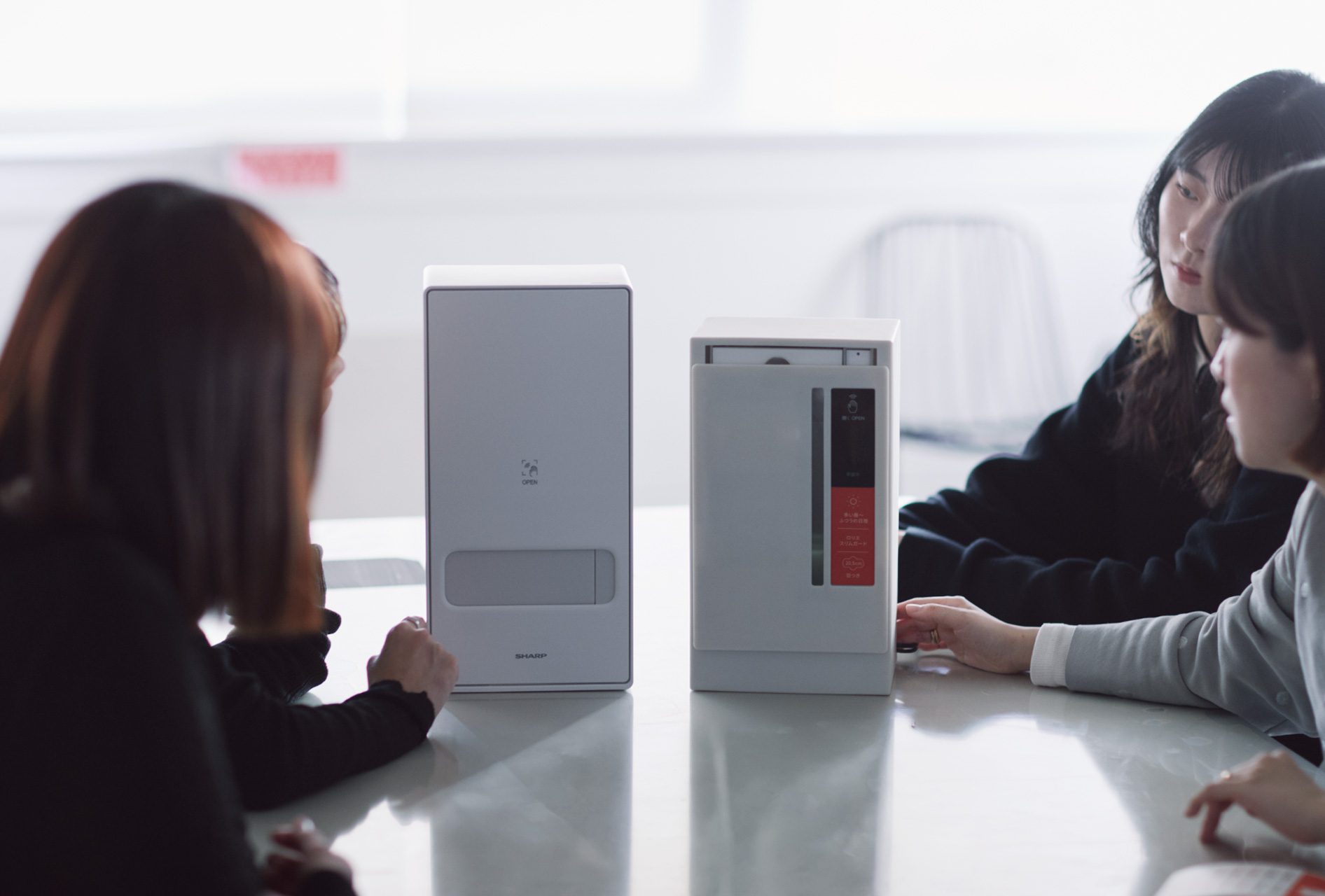
The original prototype used during the pilot program (right)
Released publicly in an unfinished state, it evolved through continuous feedback from real-world environments.
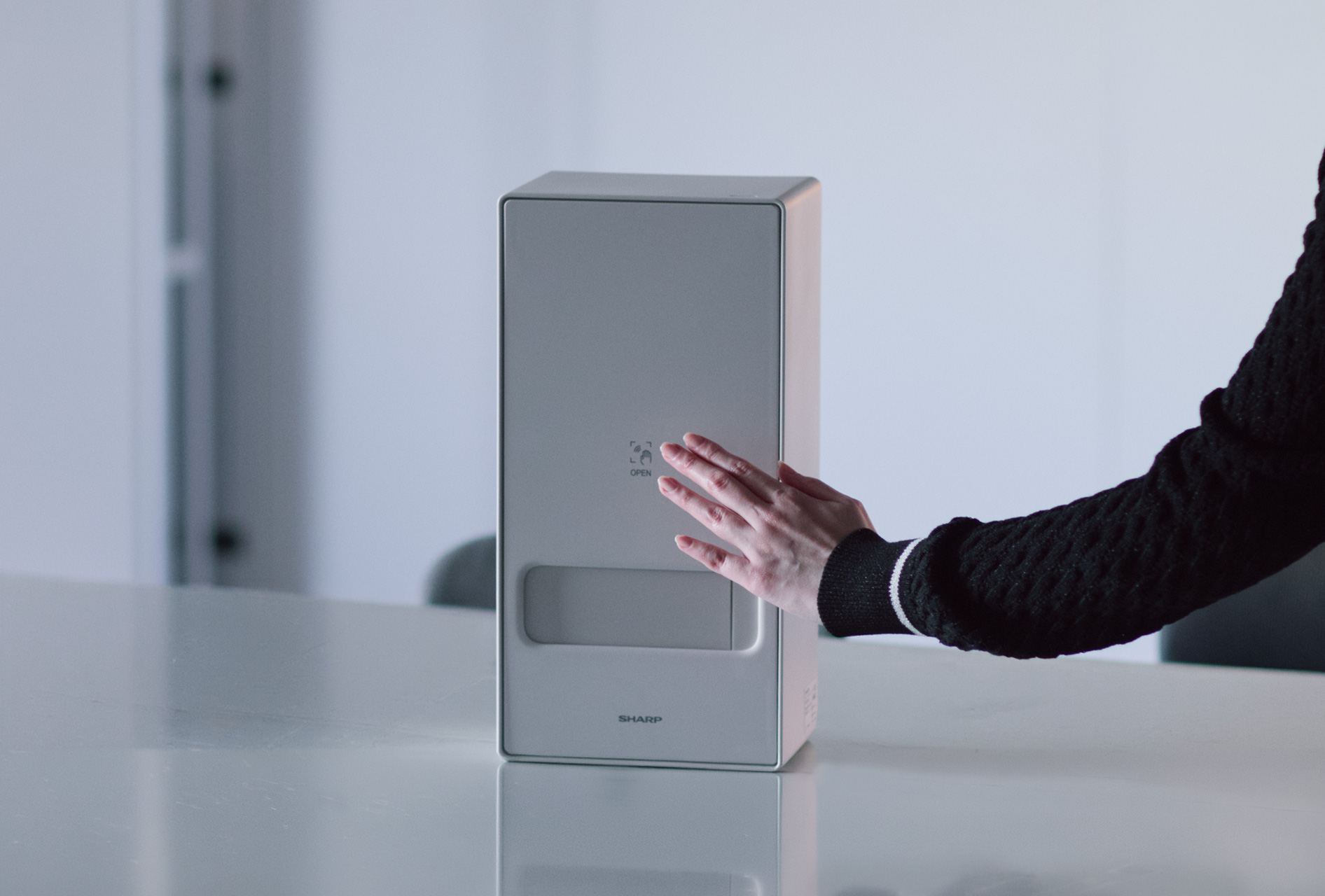
The design evolved through field testing.
Feedback from actual facilities, including replenishment usability and theft prevention measures, directly informed subsequent refinements.
What the designers shaped was not merely form, but values.
I wanted to clarify my role in helping communicate the value of providing menstrual products to society, while remaining mindful of the emotions and perspectives of everyone involved.
This is how Ning reflects on the project.
The users are only one part of the story. There are also the people who choose to install todokuto, those responsible for maintaining it each day, and those working to move the initiative forward.
SHARP is only one participant within a much larger ecosystem.
The concept, naming, graphics, and product itself were all designed to express a shared set of values.
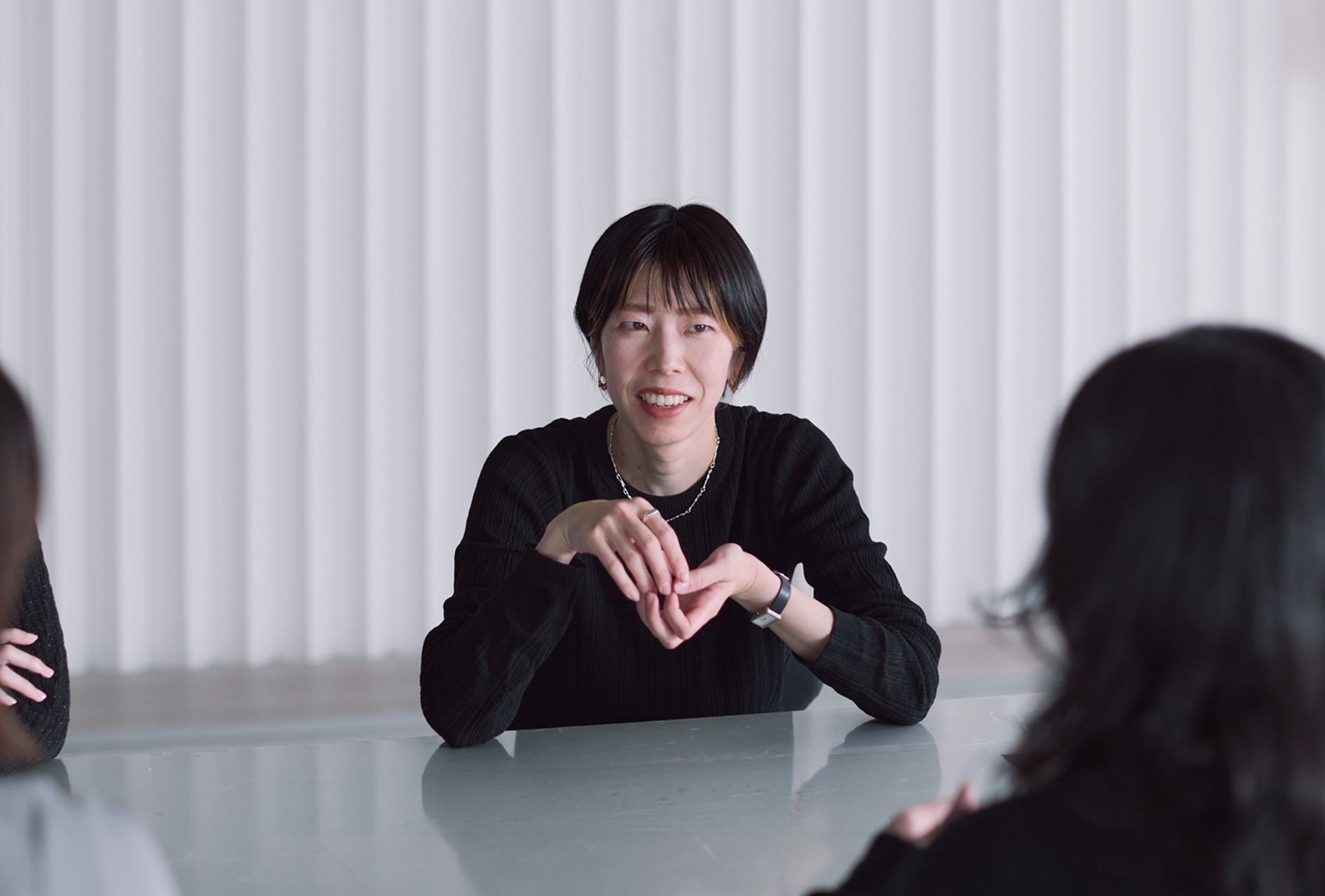
Sayami Ejiri
Product Designer
Sayami Ejiri led the exterior design, balancing the demands of public-space usability with practical considerations such as replenishment efficiency and theft prevention.
Delivering not just a product, but a gesture of care.
The name “todokuto” embodies that philosophy.
SHARP is not the central figure. Rather, the product serves as a medium through which facilities can communicate care and consideration to the people who use them.
The naming process began by exploring words that reflected the sentiments of the facilities introducing the system. Countless possibilities were examined and reconsidered, from trademark conflicts to unexpected meanings overseas. Through repeated refinement and iteration, the team ultimately arrived at the current name.
A dispenser can simply be a functional box for distribution. But I felt it could also become something that conveys the thoughtfulness of the people behind it.
The name itself carries the sentiment facilities hope to share with their users.
Giving form to kindness.
When designing the exterior, Ejiri focused on avoiding anything visually overbearing.
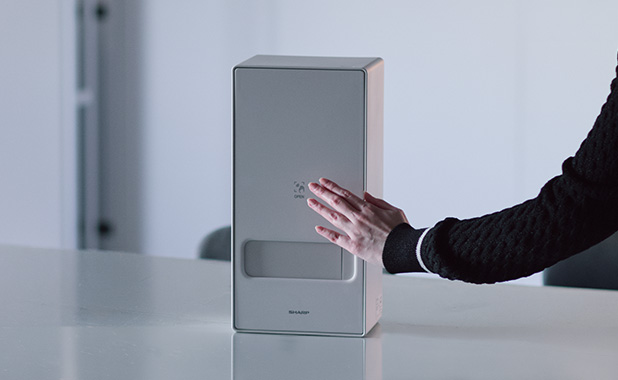
While the silhouette is simple and geometric, softly rounded corners and subtle contours around the opening create a gentler presence.
Internally, the structure is highly complex. It must reconcile competing demands simultaneously: theft prevention, ease of replenishment, and efficient storage.
Yet none of that complexity is expressed outwardly. Instead, the design quietly integrates into public environments in a way that feels approachable and human. The sense of gentleness championed by Ning is reflected throughout the form of todokuto.
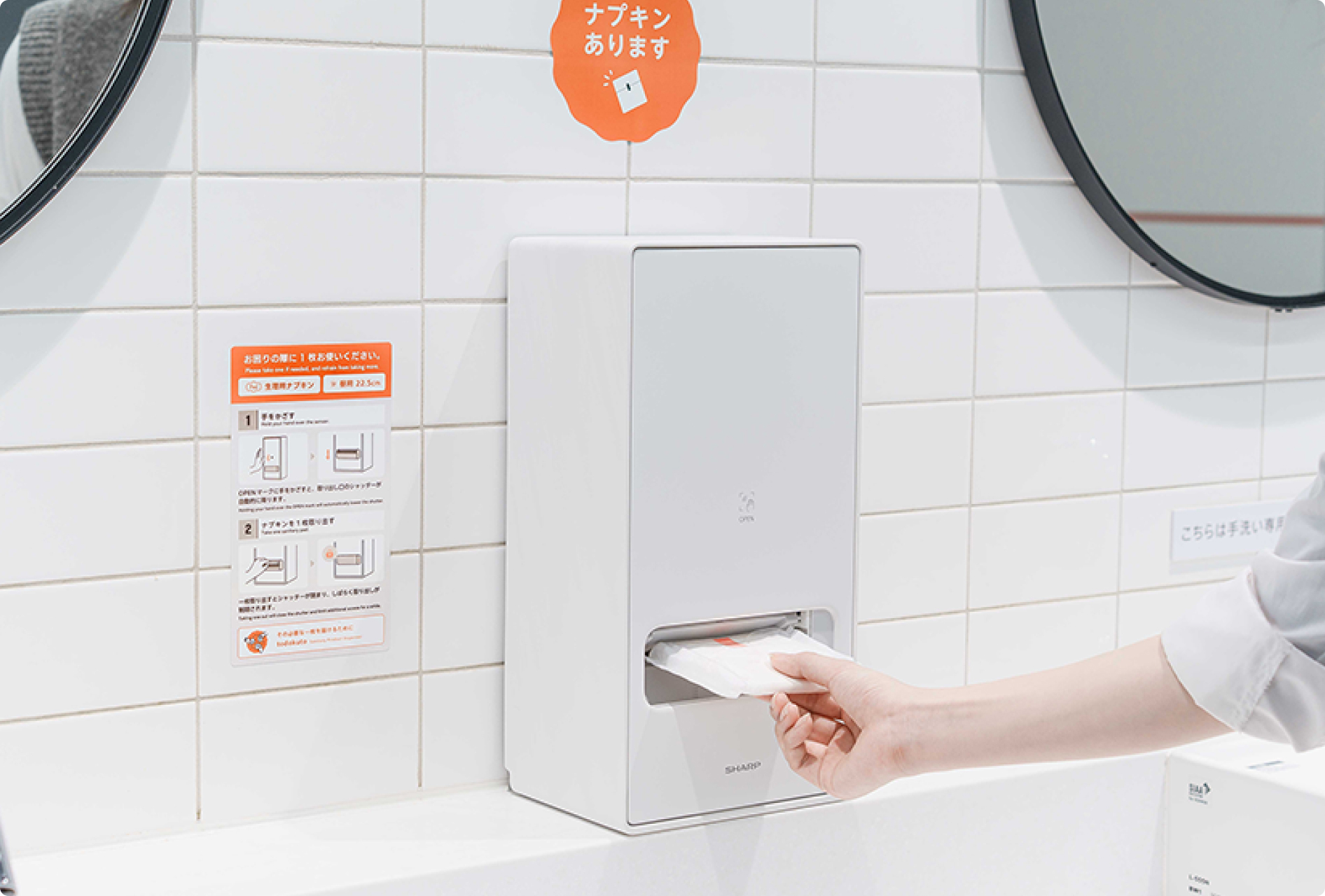
todokuto dispenser
Designed around the concept of quiet integration, its soft appearance allows it to blend naturally into public spaces.
Confronting ambiguity head-on.
At the close of the interview, the team members were asked what advice they would offer someone tackling an issue that has yet to be clearly defined.
Ning answered immediately.
Listen carefully and then take the first step.
Yamamoto:
Take time to explore the issue deeply enough that you can eventually put it into words.
Onodera:
Start with what you can do personally while trusting the people around you.
Ejiri:
Create something you can genuinely stand behind. Even if it requires endless iteration, see it through to the end.
When asked whose voices she listens to most closely, Ning replied, “My clients, and society itself.” What is actually happening in the field? What challenges are people facing? Listening to those realities is where everything begins.
Precisely because the topic remains vaguely defined, there’s always more to uncover by looking deeper.
todokuto is still evolving. SHARP continues to explore what its business model may become.
Even so, the team continues listening, testing, refining, and trying again. Through that iterative process, the project’s value gradually becomes clearer.
We don’t begin with certainty. We move forward in search of it.
todokuto is that kind of project.
Recommend
-
Reimagining the Washing Machine through Steel to Transform an Ideal Vision Into a Product Designed for Everyday Living
ES-8XS1 Compact Drum Washer/Dryer
- Product
-
Redefining the A4 Multifunction Printer Through Radical Compactness
BP-C131WD A4 Color Multifunction Printer
- UX
- Product