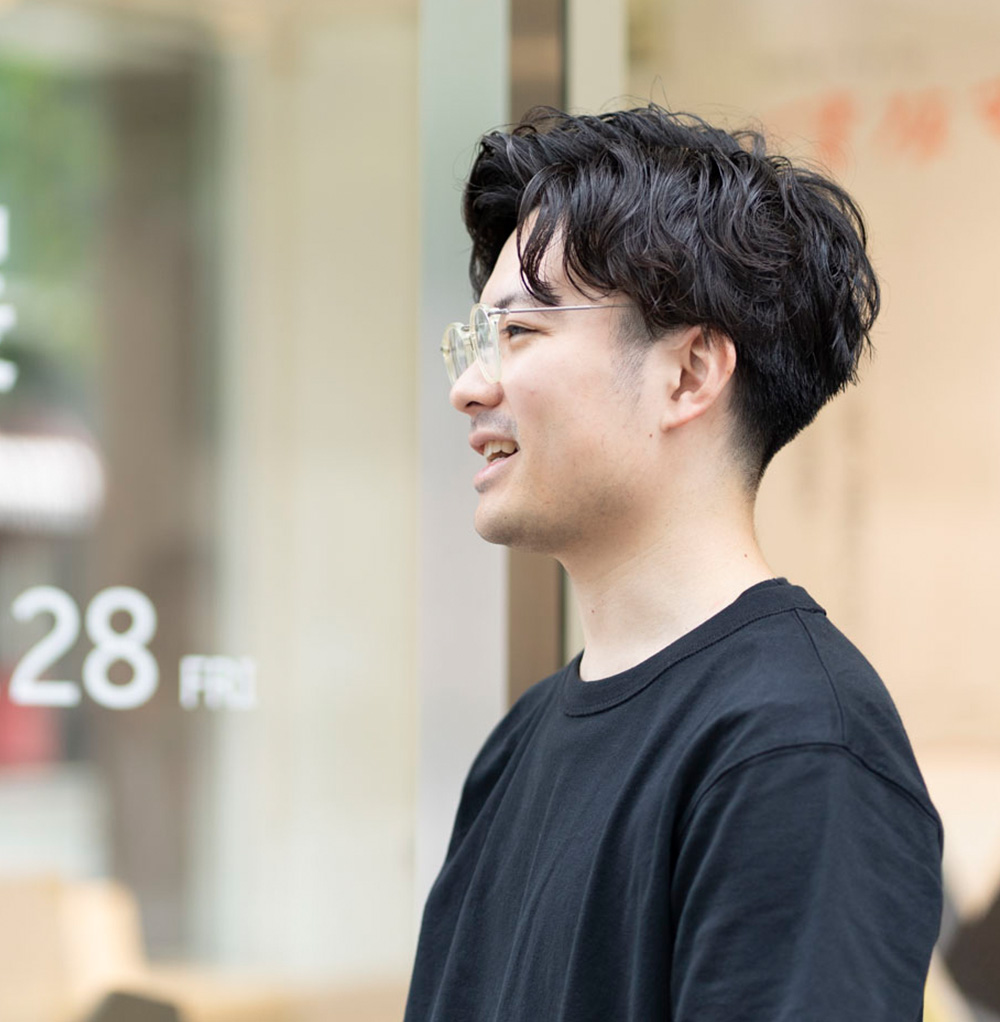
The SHARP DESIGN Manazashi Exhibition|Creating a Place for Dialogue from One Designer's Sense of Purpose
Design Notes
2026.09.28
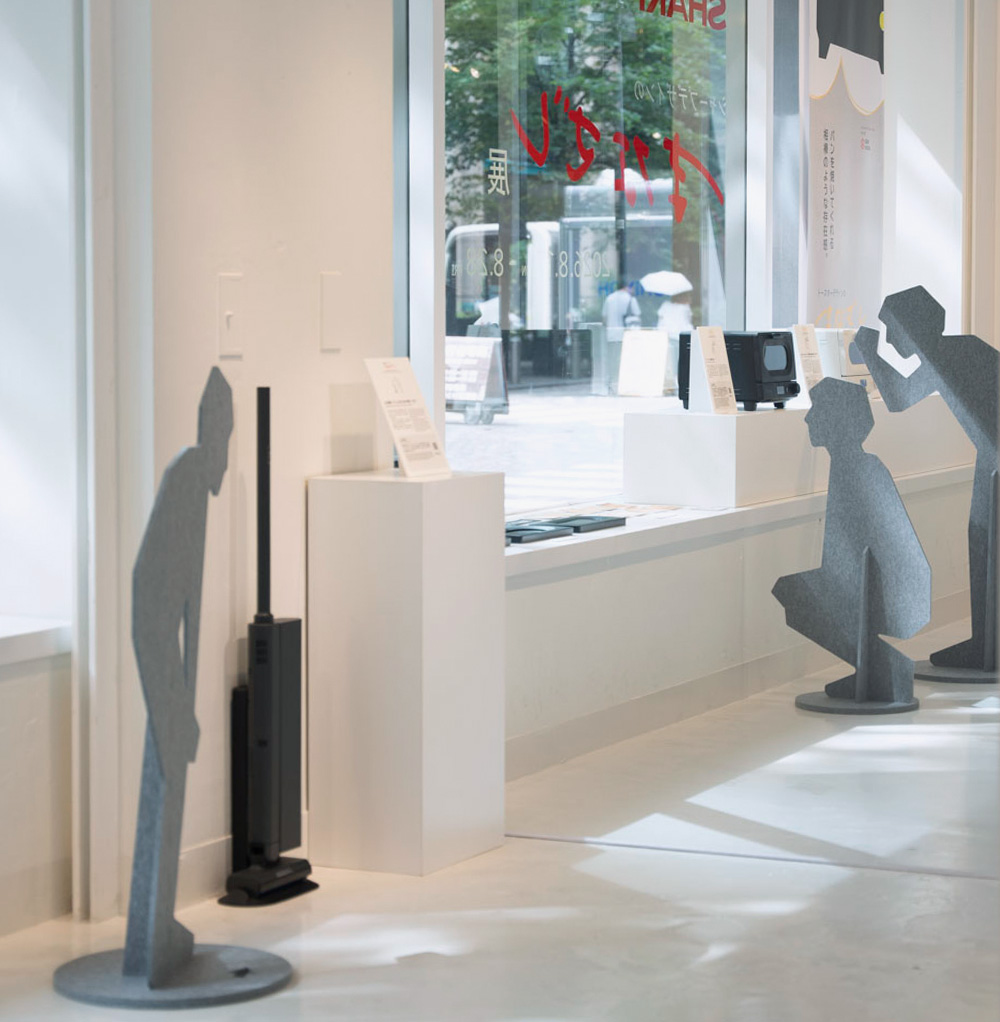
Held in August 2026, the SHARP DESIGN Manazashi Exhibition featured washing machines, televisions, hair dryers, toasters, and vacuum cleaners. It revealed the perspectives and thought processes of designers that are not immediately visible in finished products. Throughout the venue, visitors crouched down, examined details up close, and explored the products firsthand. We call this perspective manazashi, the designers’ distinctive way of seeing the world and discovering possibilities that are not immediately obvious. We spoke with the six participating designers about what they hoped to communicate and what they discovered through visitors’ responses.
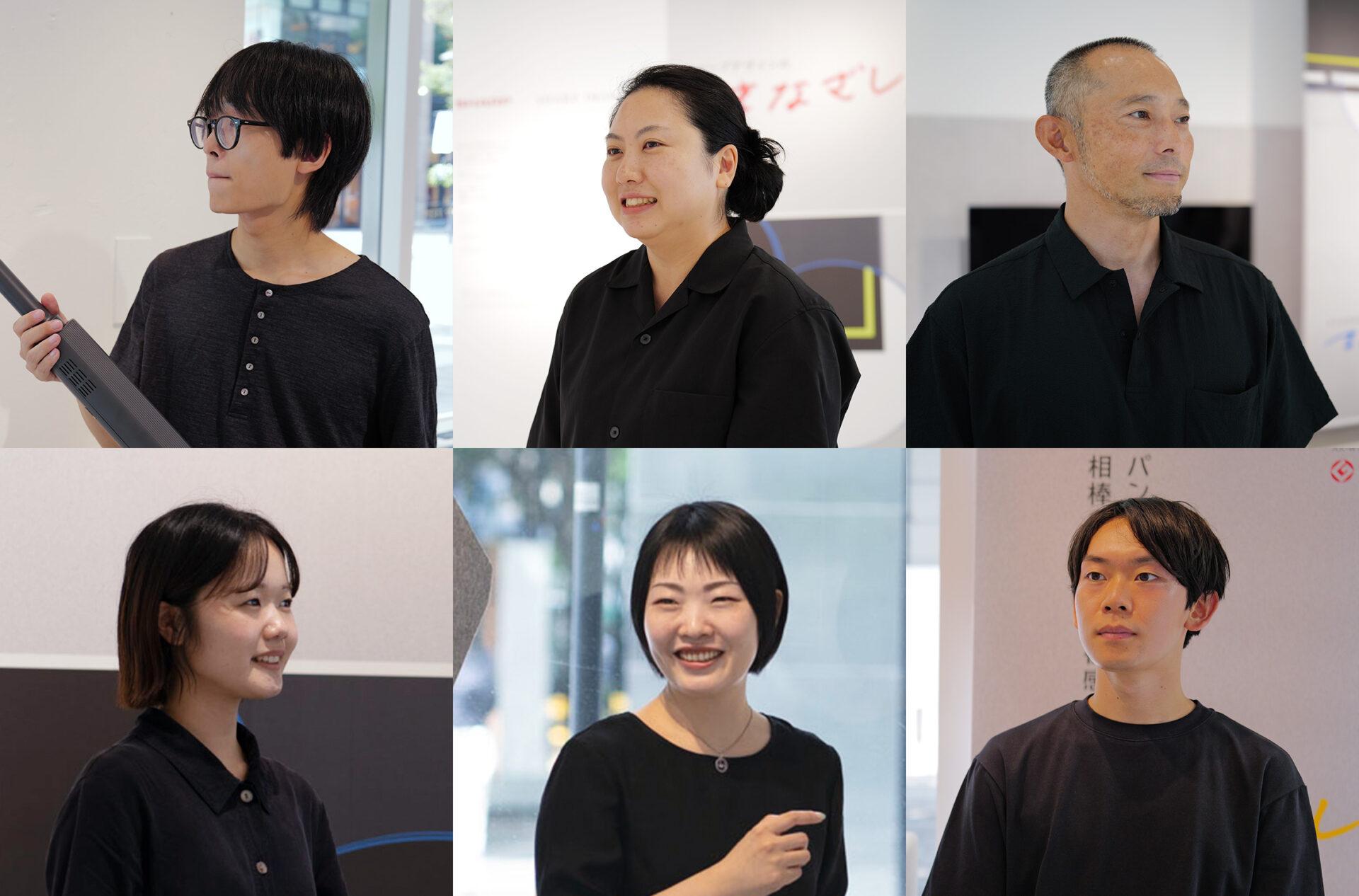
Participating Designers
Yusuke Iwai
Product Designer/Hair Dryers and Vacuum Cleaners
Iwai began his career at Sharp designing hair dryers and later moved on to vacuum cleaners. He is deeply involved in design development, including product architecture and engineering considerations.
Manako Kawaguchi
Product Designer/Washing Machines
Kawaguchi has worked on a wide range of home appliances, including air conditioners, beauty appliances, and vacuum cleaners. She currently focuses mainly on washing machine product design while also contributing to vacuum cleaner promotion.
Hiroshi Gomi
Product Designer/Televisions
Gomi has dedicated his career to television product design since the era of cathode-ray tube televisions. In addition to managing the design team, he has recently worked with the business division on promotional initiatives.
Kazuki Ohno
Product Designer/Toasters
Ohno has worked in the kitchen appliance field since joining Sharp. Alongside the product design of toasters, microwave ovens, and automatic cooking pots, he also contributes to the spatial design of press events and promotional activities.
Ai Araki
Communication Designer/Exhibition Design
Araki works in communication design to enhance the Sharp brand image. Her responsibilities include corporate advertising, product brand support, and brand communication through social media.
Rei Kikkawa
Communication Designer/Exhibition Design
In her first year at Sharp, Kikkawa joined the project while completing her new-hire training. She contributed to the exhibition while deepening her understanding of what makes Sharp and Sharp Design distinctive.
Ohno: The idea of communicating to visitors how in-house designers observe and think during the design process felt fresh. I would want to visit an exhibition like that myself, and I was excited to see what kind of space it would become.
Iwai: For some time, I had felt there were few opportunities to share what we think about through design or what happens behind the scenes. Many of our ideas and details cannot be fully communicated at retail stores, so I saw this as an excellent opportunity to share them.
Kawaguchi: When I first heard about it, the details were still unclear, and because there was no precedent, I honestly felt uncertain about how it would turn out. As preparations progressed, however, Furui's passion helped us gradually see what the exhibition was meant to communicate.
Araki: In my communication design work, I often speak with our in-house developers and hear many compelling stories that make me think, 'More people should know this' or 'Hearing this would make someone want to buy the product.' I was delighted that we finally had an opportunity to share those stories outside the company. I hoped we could create an experience that would change how visitors viewed the products before and after seeing the exhibition, rather than simply presenting information.
Kikkawa: Even before joining Sharp, I felt that the company held relatively few exhibitions about design. When I saw the planning materials, I was surprised by how much home appliance designers consider, and I was also inspired by Furui's passion. I strongly wanted to be involved until the exhibition became a reality, so I raised my hand and said, 'I want to join.'
Gomi: When he first consulted me, I thought it would be difficult because we had never done anything like it before, but I also thought it sounded interesting. He was clearly passionate about it, so I encouraged him to propose it internally, telling him, 'Why don't we give it a try? I'll support you.' Through my work in television design, I had often felt how difficult it was to communicate the details we care about to users. So I also saw it as an opportunity for people to look at our work from a different perspective.
Iwai: I design hair dryers and vacuum cleaners. With the hair dryer, I wanted to show how we balanced the business need to highlight its technical features with users’ desire for a product that blends naturally into their living spaces. For the vacuum cleaner, we displayed several prototypes so visitors could see and feel the evolution and thought process that are not visible in the finished product. Designers are deeply involved from the stages of considering the structure and concept, shaping the product through repeated discussions with engineers. I wanted people to see that process itself.
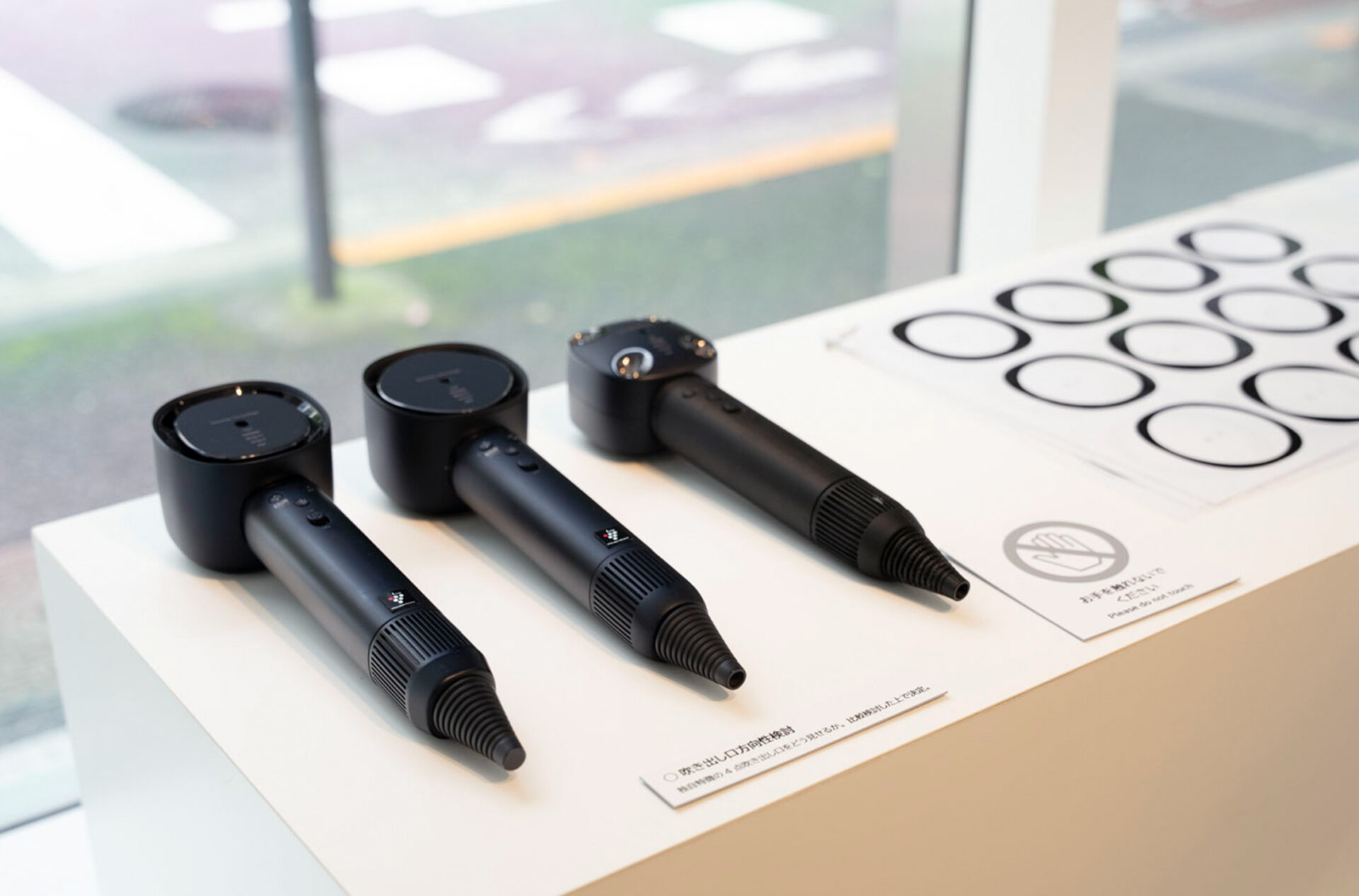
The hair dryer display showed the process of translating the technical feature of four air outlets into a form that blends naturally into everyday life.
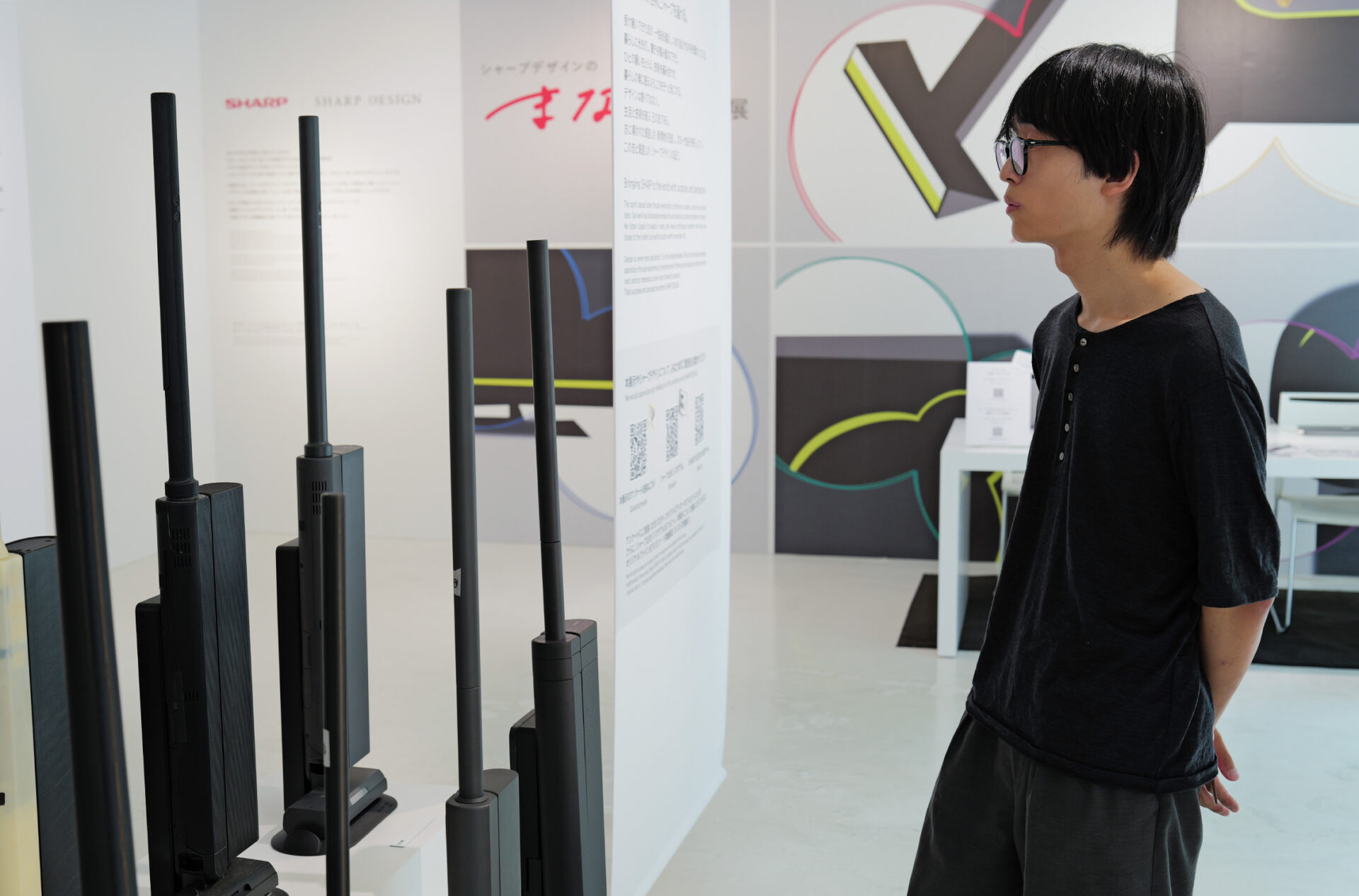
The vacuum cleaner display featured multiple prototypes alongside designer Yusuke Iwai.
Ohno: With the toaster, I wanted to communicate not only impressions such as 'cute,' 'approachable,' and 'simple,' but also why it took this particular form. The window that makes you want to peer inside and the outward-angled legs were designed to bring the toaster and its user closer together. From the many prototypes, we selected those that most clearly showed the changes in the design. For the captions, we translated specialist terminology into accessible language that visitors could more readily relate to.
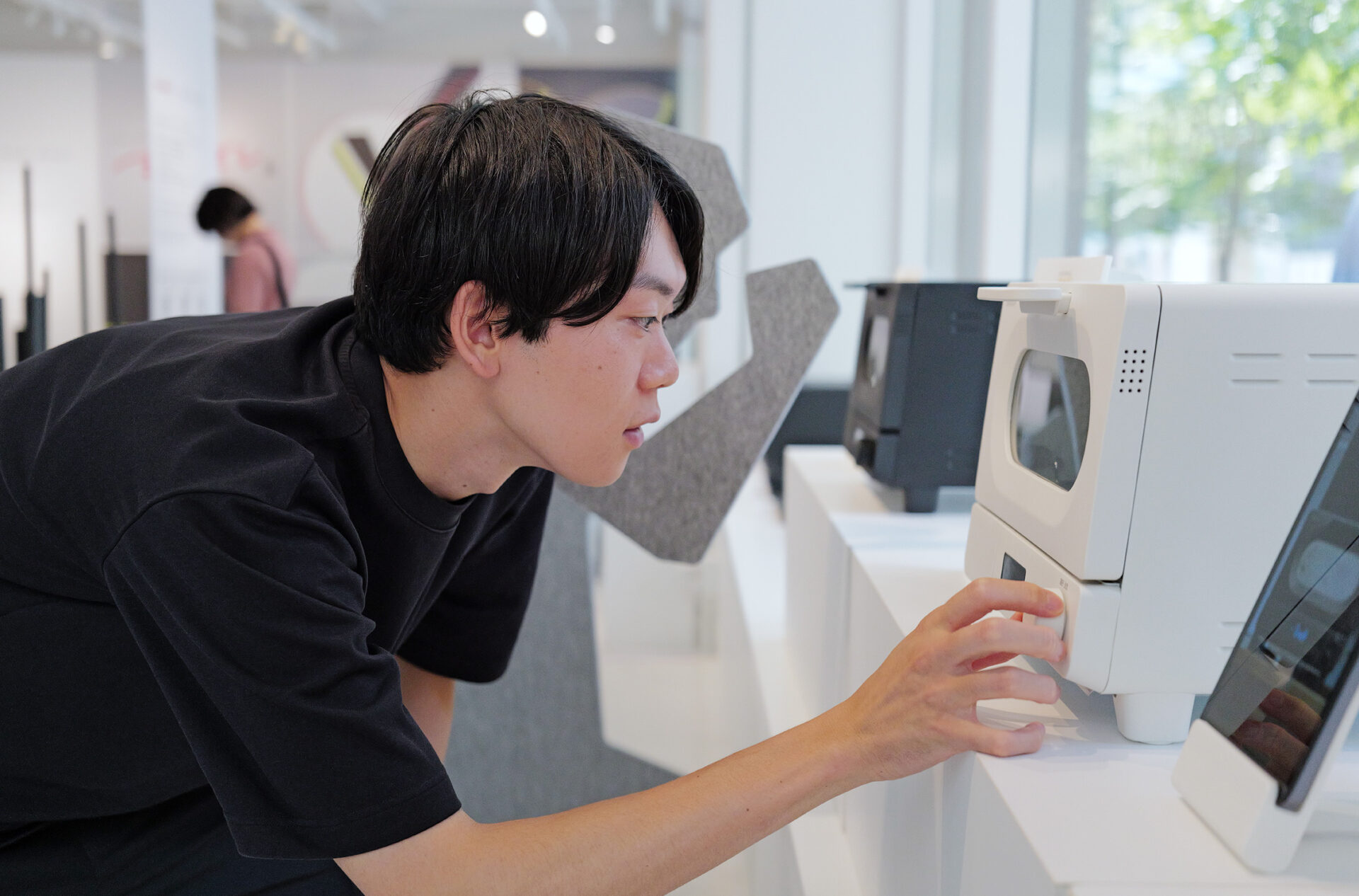
Designer Kazuki Ohno recreates the posture of peering through the toaster window.
Gomi: Televisions may all look similar at first glance, but every detail is carefully designed. I especially wanted to communicate how we combine immersive viewing and harmony with the surrounding space while also achieving high-quality sound. We deliberately conceal the speakers to create a minimal frame, but hiding them also makes both the acoustic performance and the design ingenuity harder to see. At the exhibition, some visitors crouched down to match the silhouette panels or used their smartphone lights to inspect the details. I was pleased that they experienced the same viewpoints from which we had carefully examined the product during the design process.
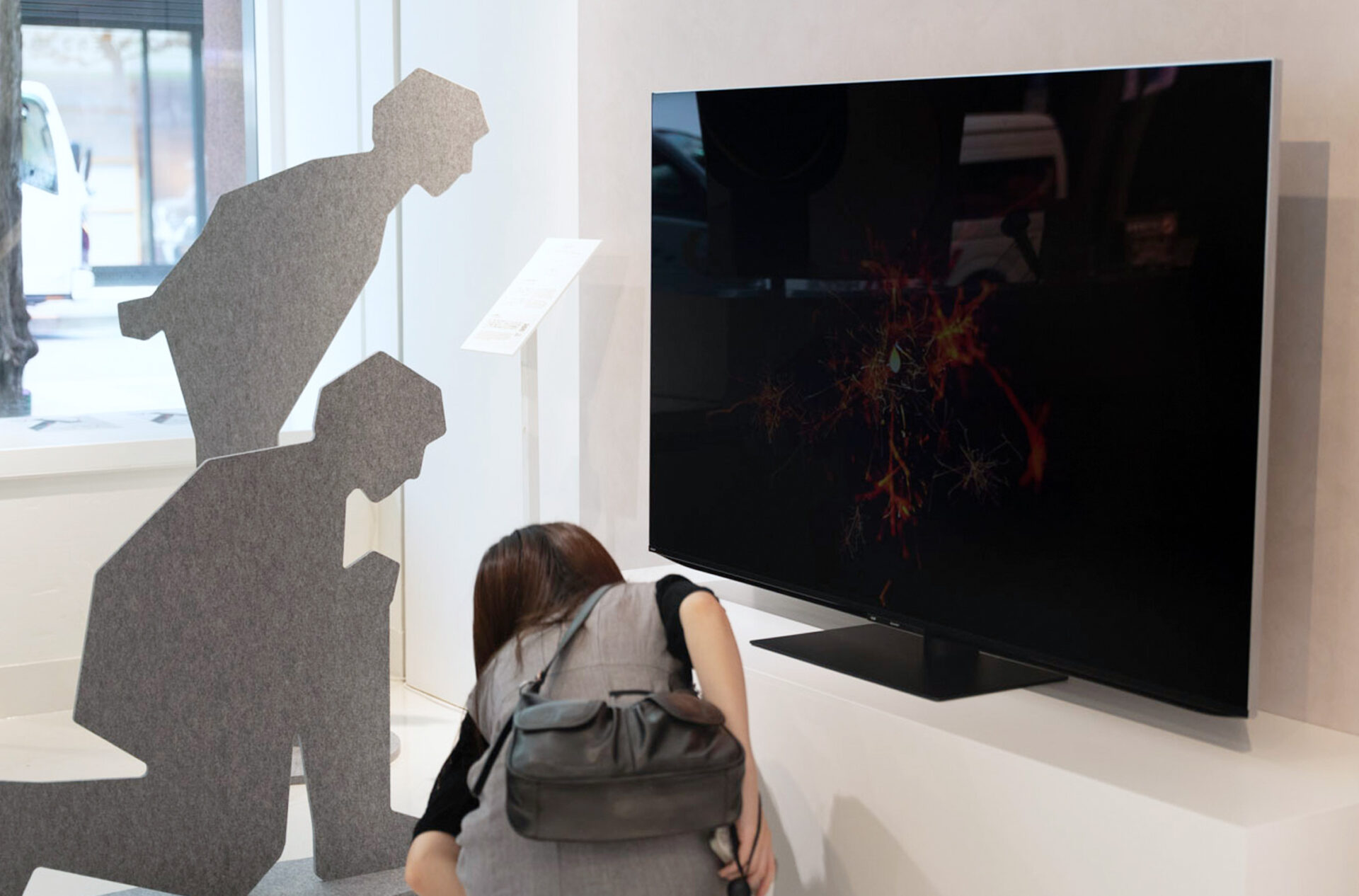
A visitor crouches down to examine the television display.
Kawaguchi: For the washing machine, I struggled with how to communicate not only the form, but also the materials, structure, and the way it fits into everyday life. Because we could not show changes through multiple prototypes, we used a single finished product and built a small wall beside it to recreate how it would appear in a laundry space. I was concerned that the display might rely too heavily on the captions and visitors' imagination to be engaging. But when I spoke with visitors, they showed interest even in the smallest details. I realized that these aspects can be communicated, and that it is worth communicating them.
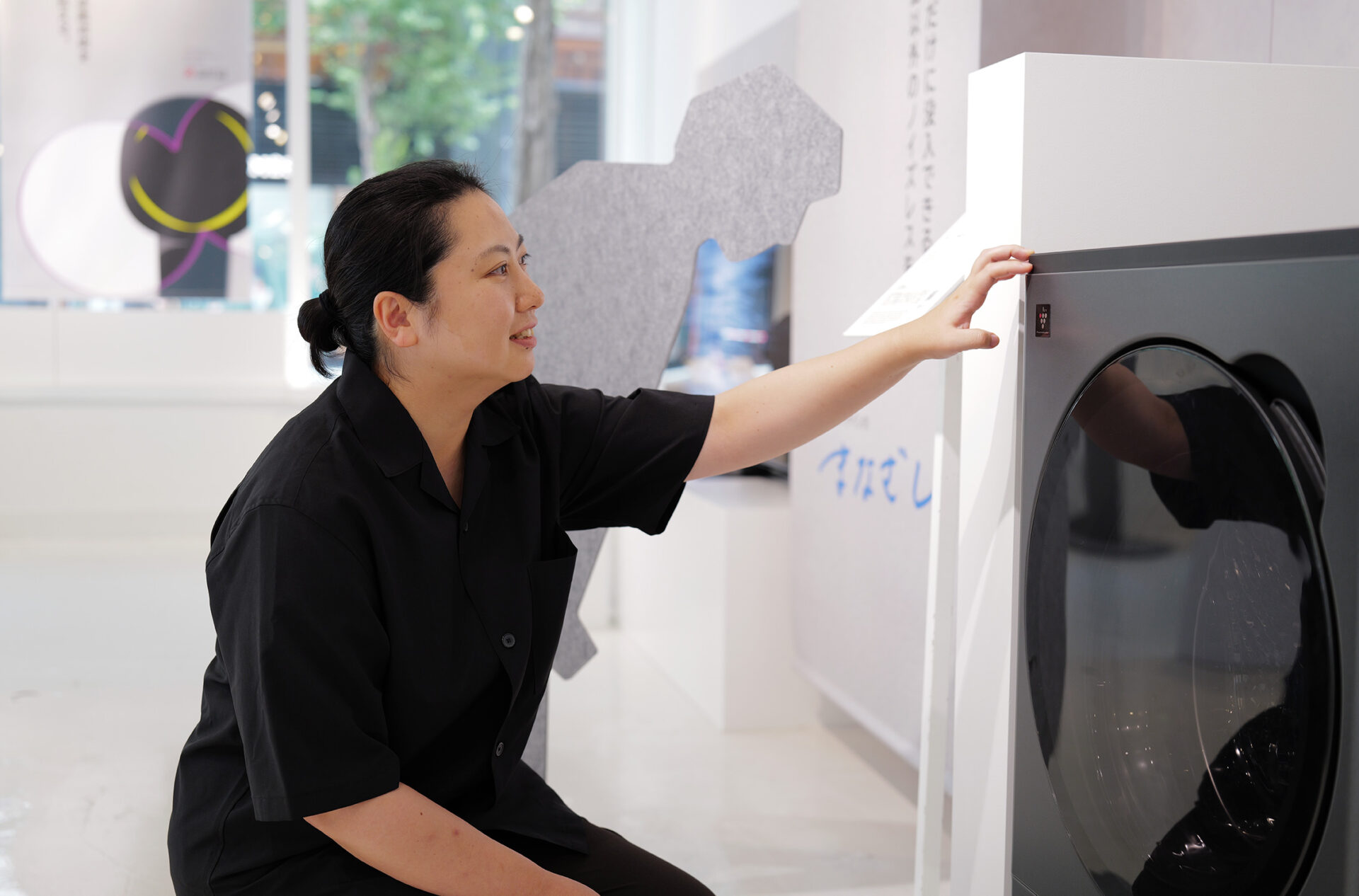
Designer Manako Kawaguchi recreates the way she examines a product during the design process.
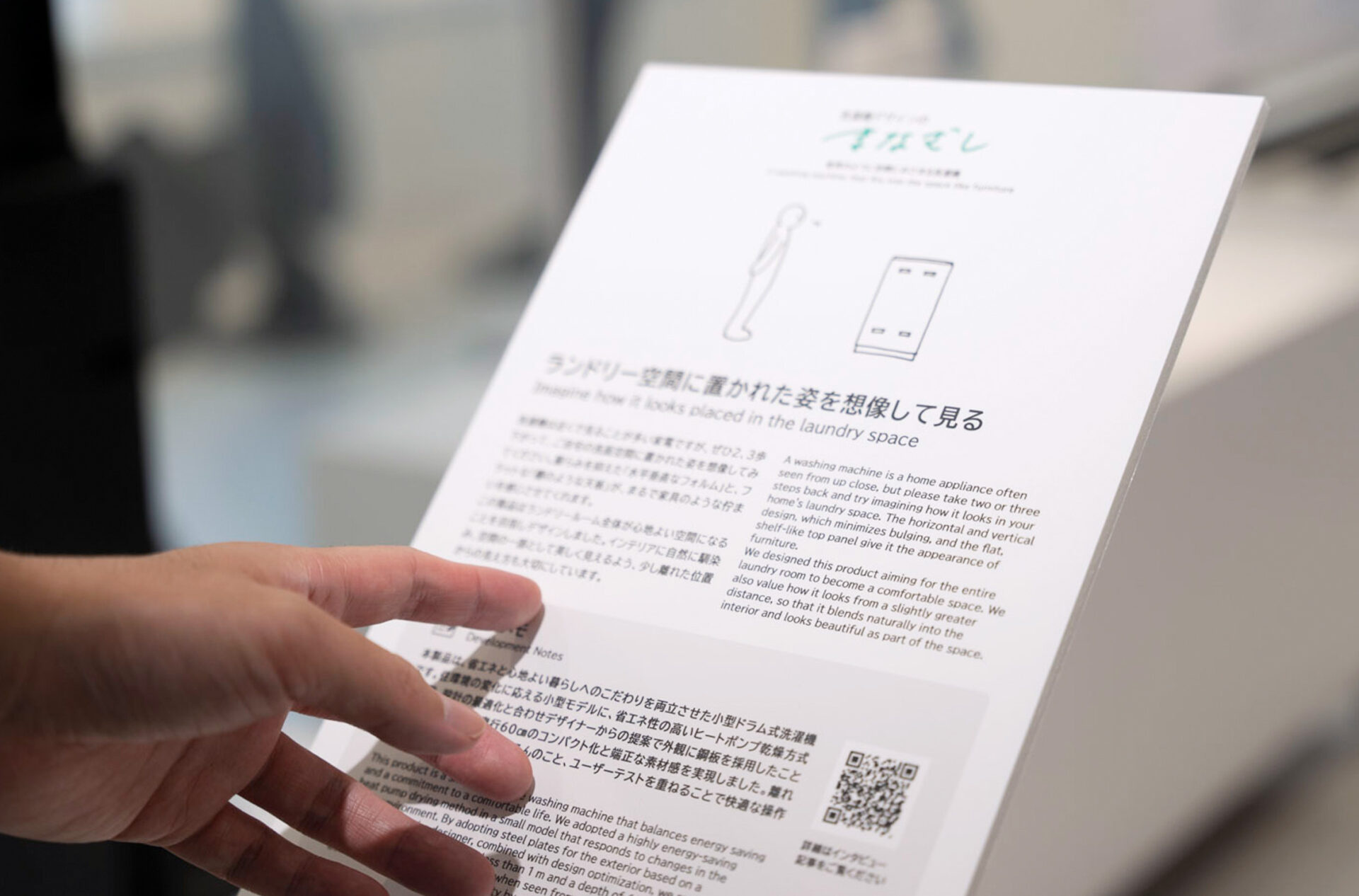
We took care to explain the exhibits thoughtfully through written content as well as the displays themselves.
Araki: Manazashi refers both to the physical act of directing one's gaze and to a designer's way of thinking and seeing. We designed every touchpoint so visitors could experience both meanings. Our role went beyond creating posters and flyers. We considered what would attract visitors before they entered, how they would move through the venue, and how they would feel as they read the captions. We approached the project as the design of the entire experience.
Kikkawa: For example, we felt that explaining too much in the flyer or entrance graphics could diminish visitors' desire to explore the exhibition. We therefore avoided giving away too much information and intentionally left room for visitors to become curious and explore. One challenge we worked on until the very end was balancing a professional impression that felt true to Sharp Design with the open atmosphere of an exhibition anyone could enter. This applied not only to the visual design, but also to the words. As a new employee, I identified wording that felt overly formal or difficult to understand and revised it so that it would not create distance between the exhibition and its visitors. I was also happy that the stickers and patches created as giveaways prompted conversations with visitors and helped brighten the atmosphere throughout the venue.
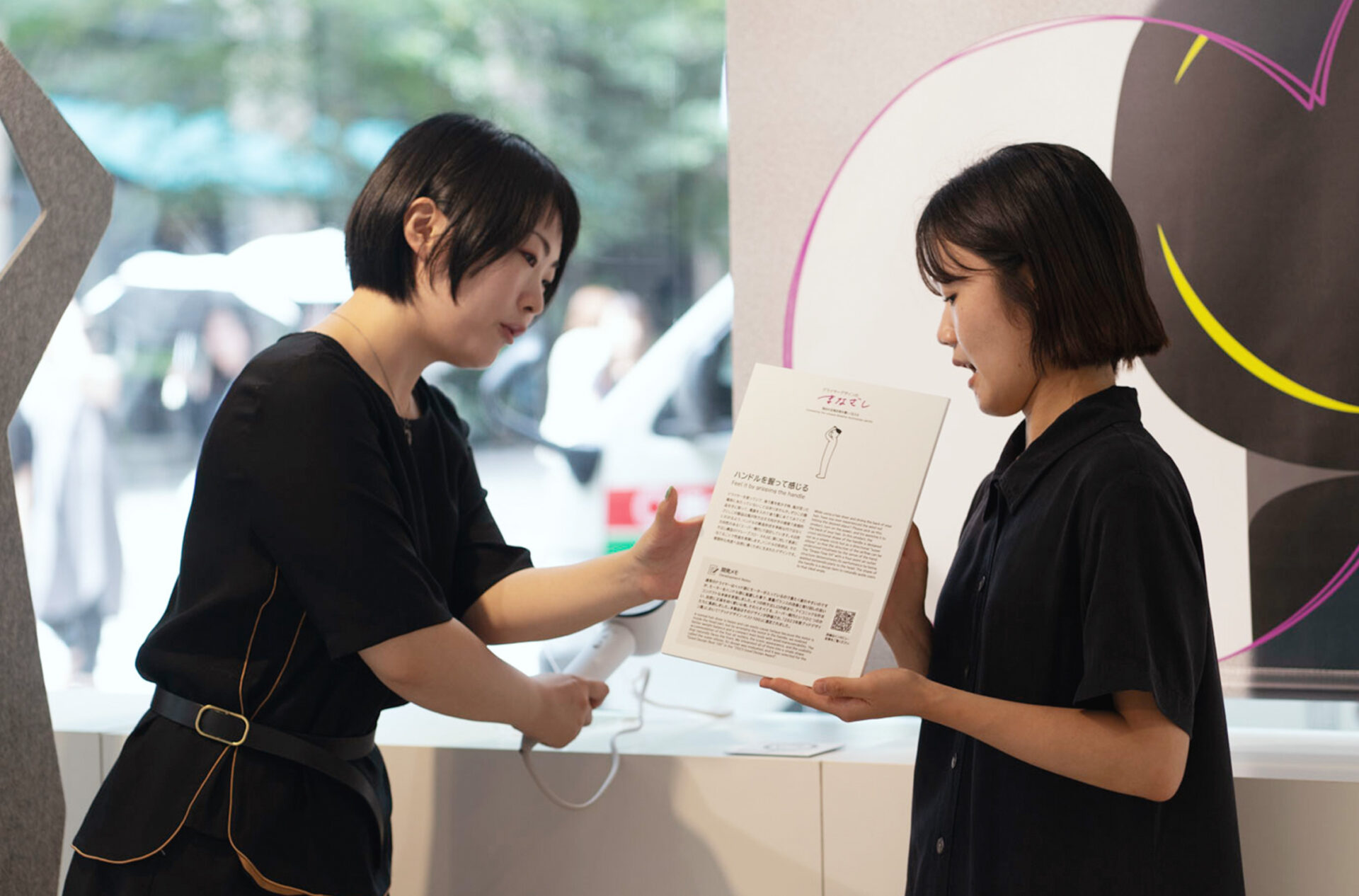
Communication designers Ai Araki, left, and Rei Kikkawa, right, carefully refined every detail, including the wording of the captions.
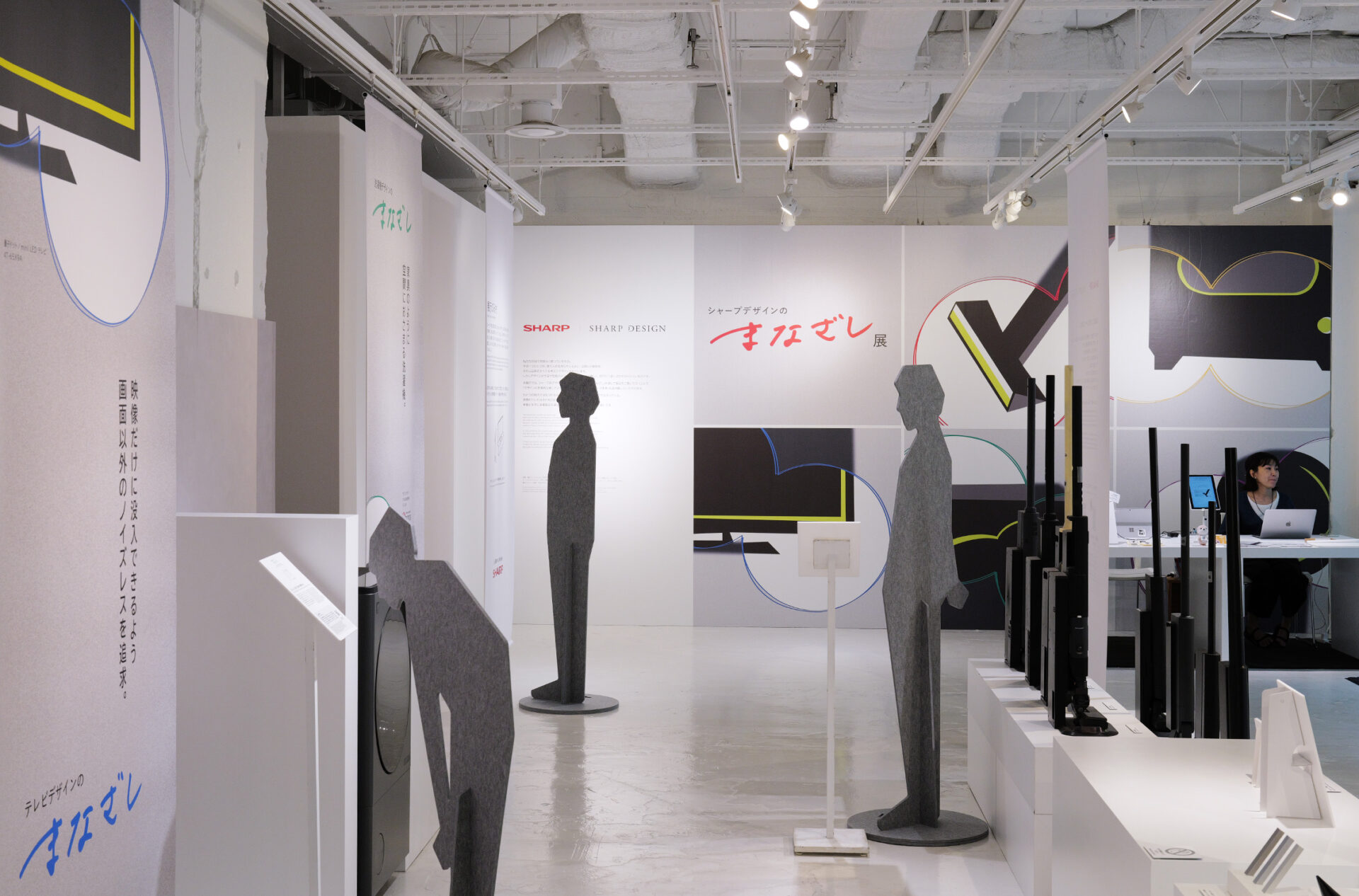
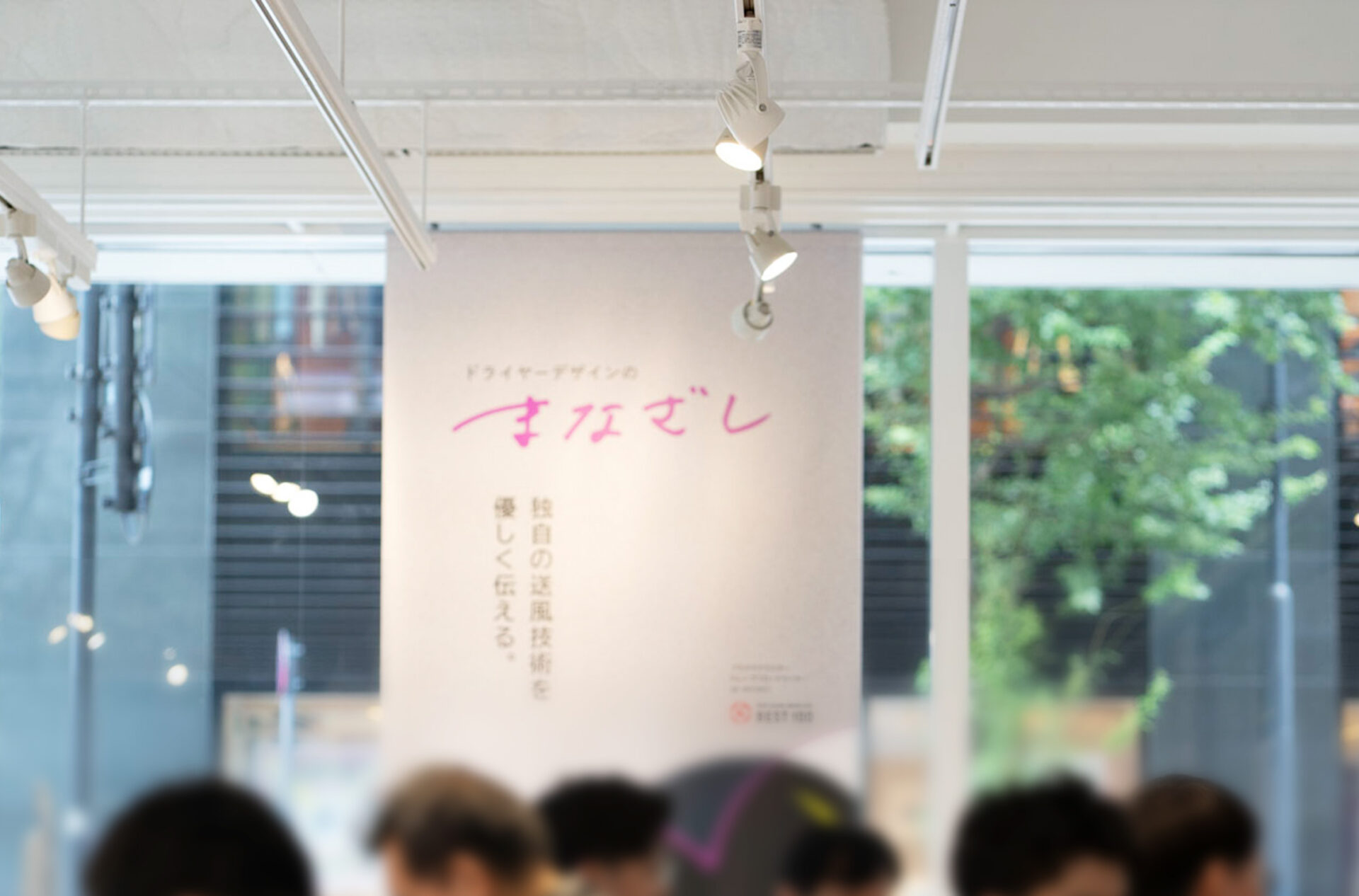
A view of the exhibition venue, designed with visitors' movements and responses in mind.
Ohno: Before the exhibition, I wondered how much interest people would have in a specialized design exhibition. But many visitors listened closely and said, 'I had no idea you designed even that level of detail.' Their responses gave me confidence that our intentions were being understood. It was also memorable to see people relate to the excitement of peering through the toaster window and to our desire for them to feel that the toaster could be a companion. Although the exhibition examined products through the lens of design, behind every product is the passion of many people, including engineers, planners, and sales teams. I believe visitors were able to experience a part of that directly.
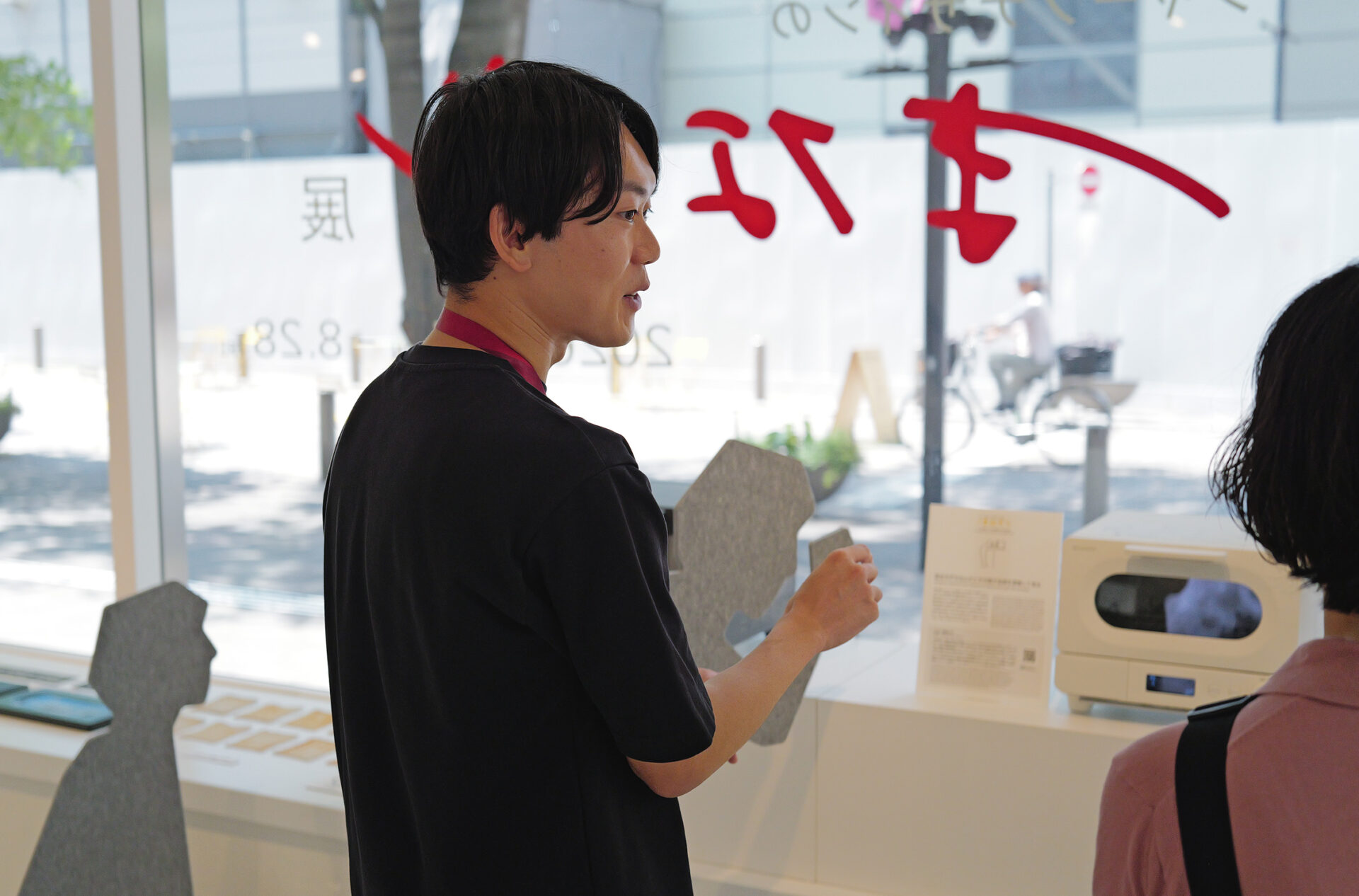
The participating designers actively communicated with visitors throughout the exhibition.
Iwai: What remains most vivid for me is a video of a boy who came with his mother on the first day and happily moved the vacuum cleaner around. A team member at the venue shared the video with the family's permission. When we watched it with the development team, we were all excited and felt that our attention to detail in both the exhibition and the product had been worthwhile. Because major home appliances are used inside the home, we rarely have opportunities to see them in actual use. That made it especially meaningful to feel a direct connection with the users we are designing for. Visitors also told us, 'Sharp does good design, too.' The exhibition reminded me that our design can contribute not only to sales, but also to strengthening the brand.
Kawaguchi: While I was at the venue, one visitor told me, 'I hadn't really been paying attention to what Sharp has been making recently, but you're doing some interesting things.' Rather than simply explaining the products, sharing the designers' perspectives and the trial-and-error process seemed to change people's impression of the brand itself. In the past, I sometimes hesitated, thinking certain details did not need to be said. This experience made me feel that clearly communicating what we care about and the passion with which we design is a form of sincerity, both toward customers and toward the colleagues with whom we develop products.
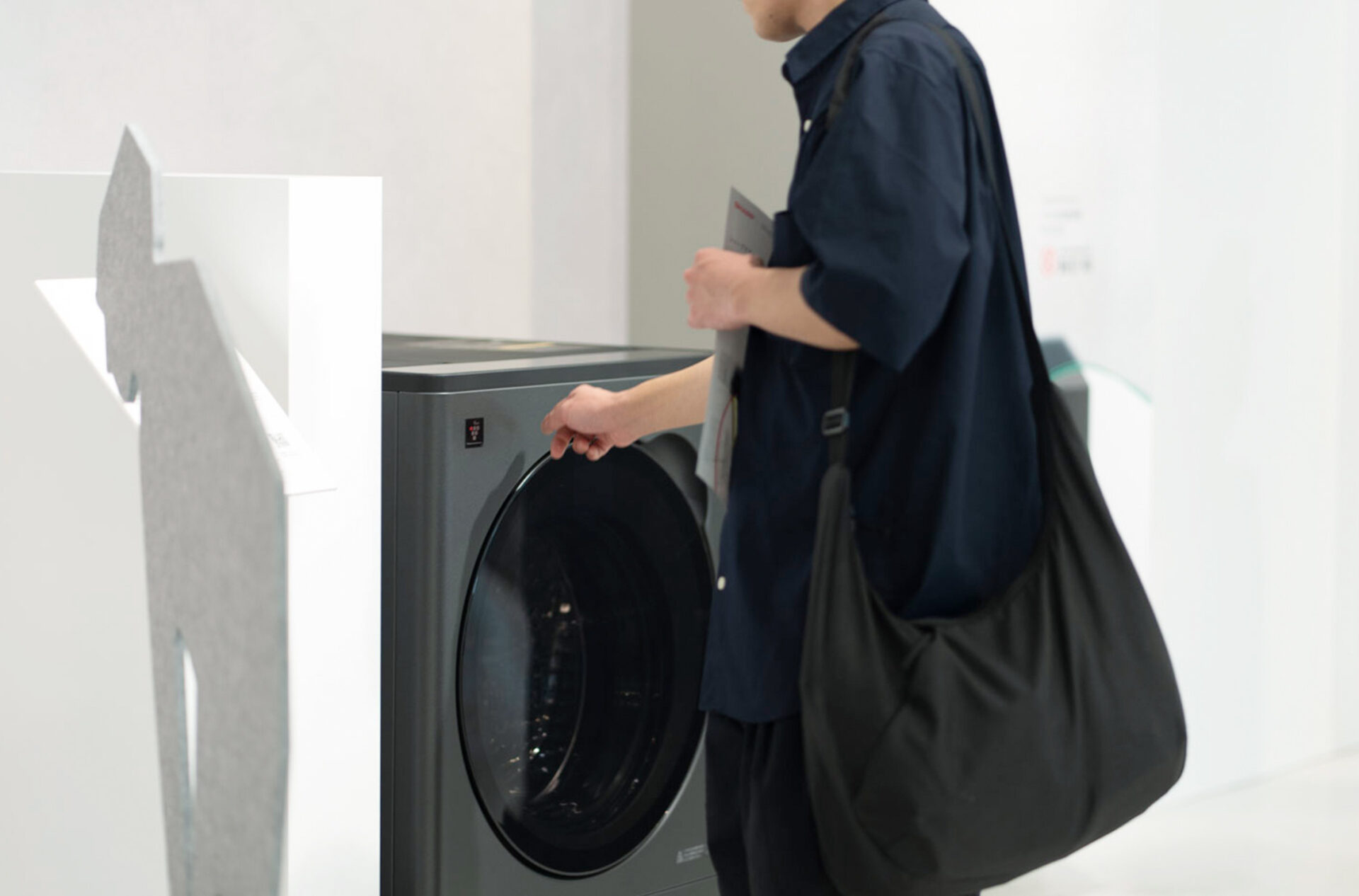
By carefully communicating designers' perspectives and the trial-and-error behind product development, the exhibition prompted visitors to see the products differently.
Gomi: People often assume there is little left to design in a television. But when we explained the measures taken to conceal the speakers, or how the frame's material and finish affect the living space, their response sometimes changed to, 'I see. So that was the reason.' I was also very happy to see a post saying, 'Thank you for making the television frame silver. I want to shake your hand.' I feel the exhibition shone a light on efforts that usually remain unseen.
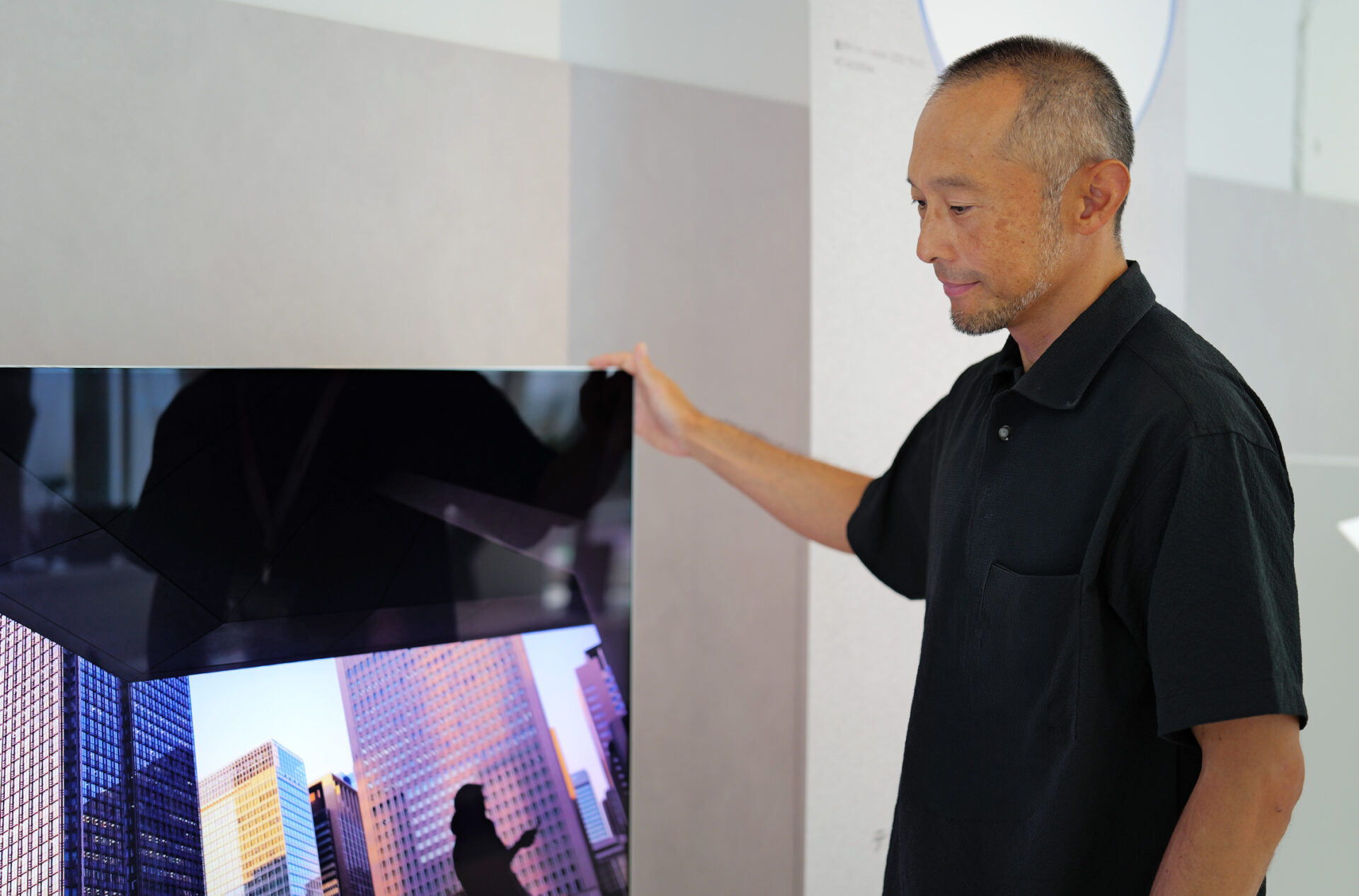
Hiroshi Gomi saw through visitors’ reactions that the care invested in the design was reaching users.
Araki: We linked the entire exhibition to the idea of manazashi so consistently that visitors themselves used the word when describing their impressions. I was relieved to hear comments such as, 'The designers’ manazashi revealed new appeal in the products.' I also realized that our approach of refining a product through repeated prototyping, something that feels ordinary inside the company, is recognized externally as a strength.
Kikkawa: I was delighted when visitors said that the exhibition had changed the way they saw appliances they already used at home. Some said they would stop at an electronics store on the way home and look at products differently there, too. It was exciting to think that we might have brought a small change to our customers' everyday lives.
Gomi: In a word, the exhibition showed me the potential of Sharp Design. At first, I wondered whether we could really make it happen. The design division had not held an exhibition in more than 30 years, and we did not have an abundance of people or time. We had only looked at exhibitions by other companies and thought how good they were. That was our starting point. But once we began moving forward with Furui's passion behind the project, others with the same kind of energy naturally gathered around it. Everyone was busy, yet they devoted themselves fully to the project. As the project progressed, it became clear that each person had something they wanted to communicate. I was very happy that the exhibition ultimately became a place filled with such collective energy.
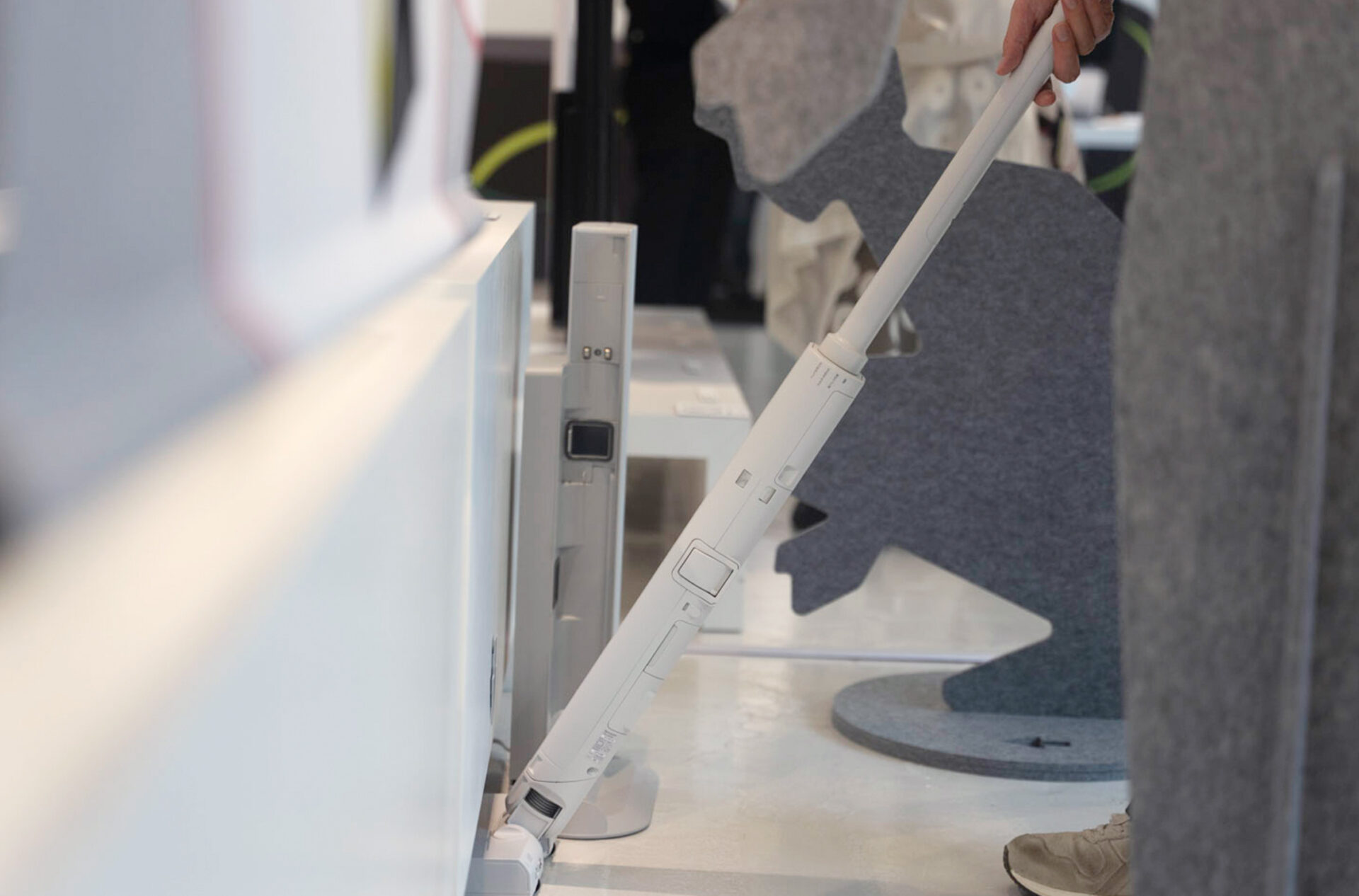
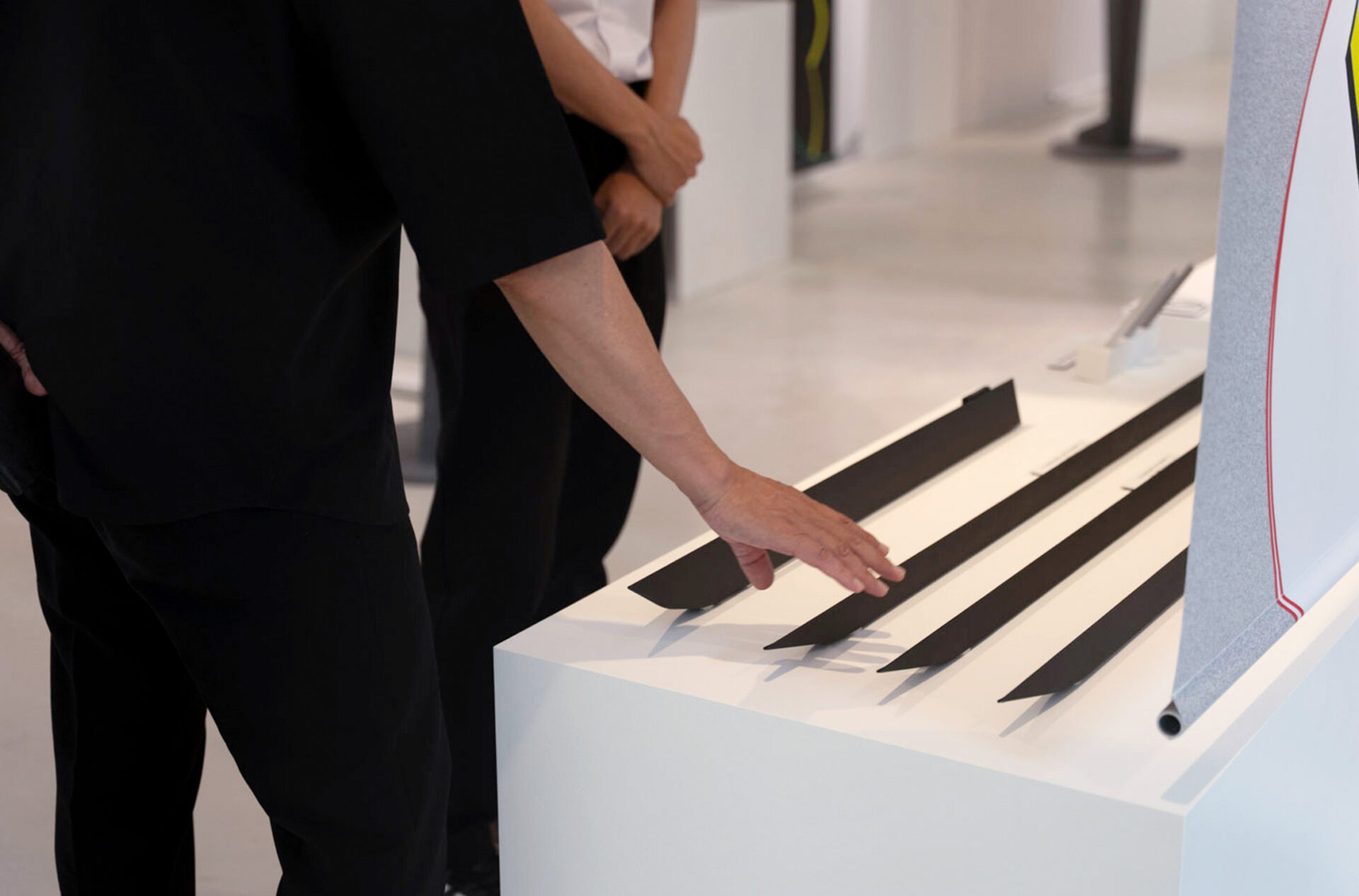
Through the exhibition, we saw that the questions designers engage with every day, and the process of working through repeated trial and error, can resonate with people. Visitors’ responses reminded us of the importance of clearly communicating the thinking and values behind our products.
Sharp’s designers, together with the many colleagues involved in product development, will continue to listen closely to people and society. By identifying needs that have not yet been put into words, they will keep proposing new possibilities for everyday life. The exhibition also gave the participating designers an opportunity to recognize the value of their work anew.
Interviewer: Keiko Matsuoka
Matsuoka is responsible for organizational design within Sharp's design division. She has contributed to the development of Sharp Design's new statement and principles of action, as well as the creation of the design division's website.