The SHARP DESIGN Manazashi Exhibition|Discoveries and Connections Inspired by Sharing Designers' manazashi
Design Notes
2026.09.28
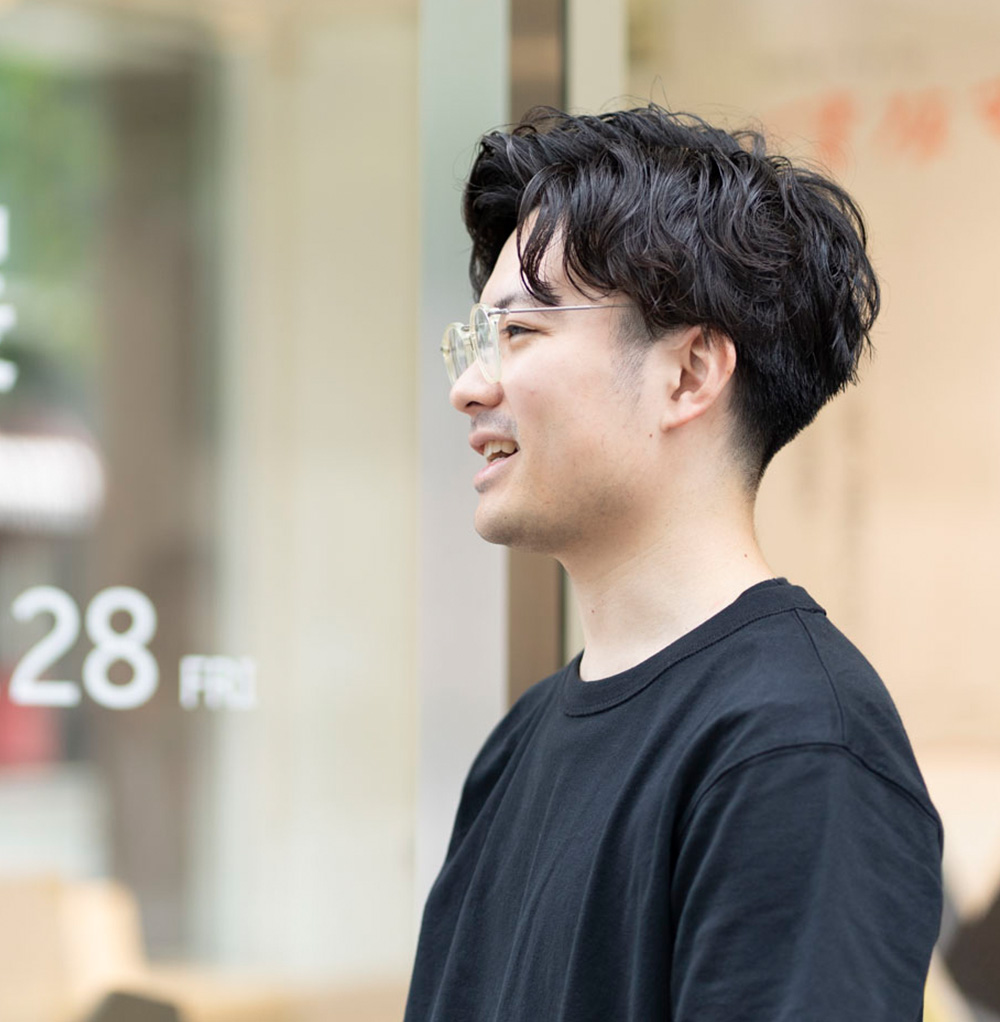
The SHARP DESIGN Manazashi Exhibition invited visitors to experience the ideas and design approaches behind Sharp’s products and services. At the heart of the exhibition was manazashi, the designers’ distinctive way of seeing the world and discovering possibilities that are not immediately obvious. The exhibition was initiated and led by designer Shoma Furui. We spoke with him about what inspired the project, the challenges he encountered, and what he learned from visitors’ responses.
Shoma Furui
After studying product design at Nagoya City University, Furui joined Sharp upon graduating in 2020. He has worked on the design of multifunction printers, logistics robots, and smartphones, and is currently involved in television design.
I had long felt that Sharp was a company capable of sharing more of its design philosophy and cultural activities with the public. Products and technologies are, of course, important, but I also believe there is value in communicating how we view society and the mindset behind our approach to creating things.
One of the experiences that influenced me was an exhibition I participated in independently several years ago. Among the participants were many people whose companies had joined as organizations rather than as individuals. Seeing that made me think about the significance of companies engaging with society beyond their direct business objectives. Sharp is a manufacturer known by many people, and I felt there was real value in sharing cultural perspectives through the lens of design. That idea gradually began to take shape within me.
Another turning point came when I was involved in a smartphone press event, where a design booth was used to communicate the brand. Through that experience, I realized that exhibitions can be a powerful way to convey the value of design and branding. Then, in January 2026, AQUOS televisions marked their 25th anniversary, and I initially began considering an exhibition centered around AQUOS.
The project began with a simple step: presenting a proposal to my supervisor within the team. Naturally, no one is going to come to you and say, "Please organize an exhibition." If you want to make something happen, you have to take the initiative.
A major turning point came when I visited an exhibition at GOOD DESIGN Marunouchi. By coincidence, it had been organized by a company where a younger fellow graduate from my university worked. I spoke with them about the venue's audience, expected visitor numbers, costs, and operational requirements, and felt it could be an ideal match for the exhibition I had in mind.Budget and exhibition management were among the biggest concerns I anticipated. Learning more about the venue gave me confidence that the project might actually be achievable.
At the same time, the core concept of the exhibition changed significantly along the way. Initially, I envisioned an exhibition focused on the AQUOS brand. However, through conversations with various stakeholders, I received valuable feedback and perspectives that I had not considered myself. It became clear that the idea needed to be reconsidered from the ground up.
As a result, the focus shifted from a specific product brand to an exhibition that would communicate the broader mindset of Sharp Design. While I was mindful that the exhibition itself should never become the ultimate objective, I also felt strongly that I did not want the project to lose momentum.
I remained committed to the original question that had motivated me, while listening to opinions from both inside and outside the company, refining the concept, and involving more people along the way. Little by little, the project moved closer to realization.
One comment from a colleague left a lasting impression on me: "Don't lose sight of the passion that's driving you." Logical explanations are important, of course, but I also made a point of sharing the concerns and aspirations that motivated me whenever I had the opportunity.
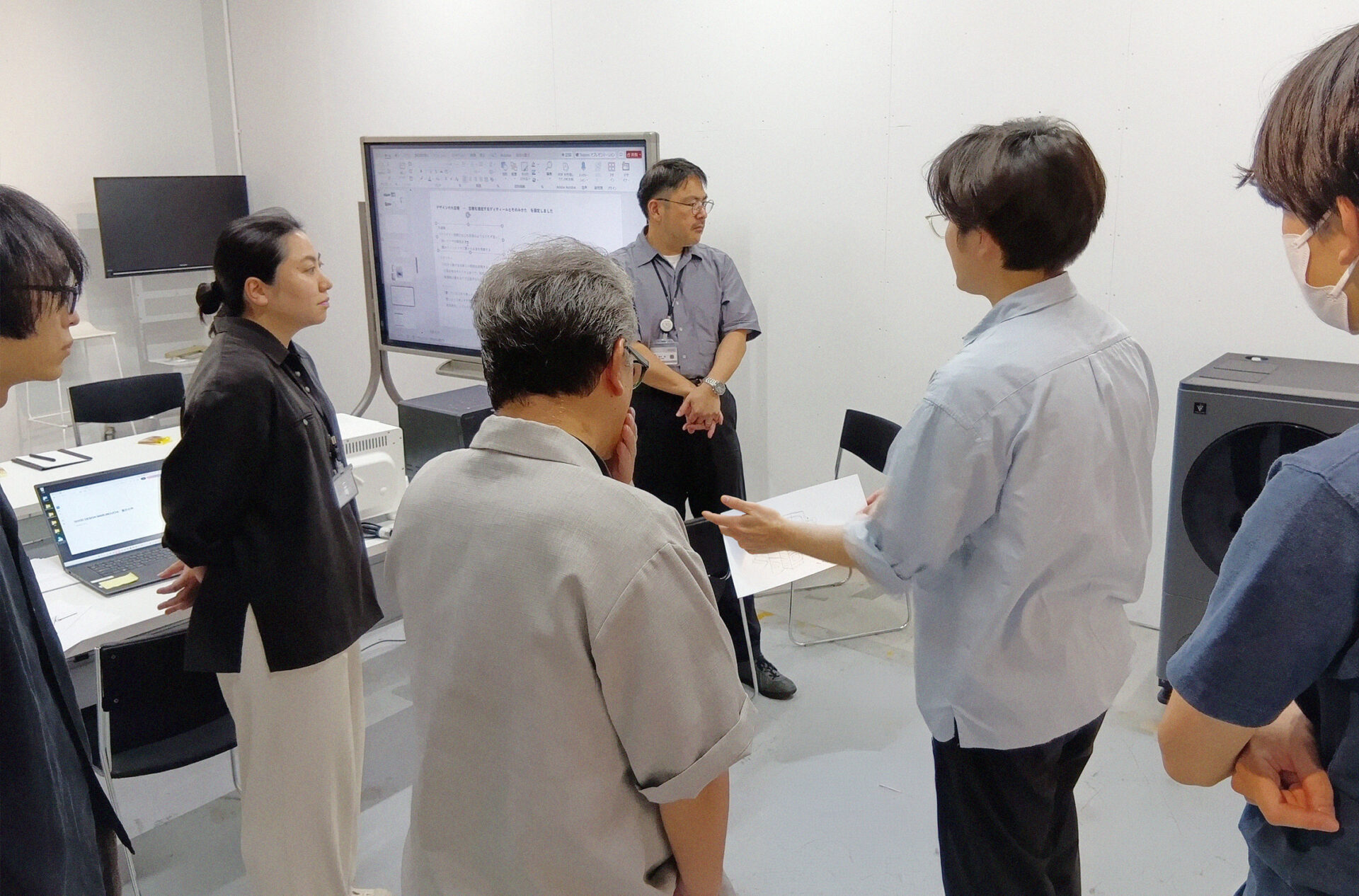
The exhibition concept was communicated directly and passionately to the designers involved in each featured product.
When people talk about the appeal of a product, the conversation often focuses on functions, specifications, and numbers. But design cannot be explained by those factors alone.
What designers pay attention to is how people live, what subtle issues or inconsistencies they notice, and how those observations are transformed into form and experience. What we wanted to communicate through this exhibition was that unique way of seeing the world, the designer's manazashi.
To shape the exhibition, I first studied a wide variety of exhibitions. Some were dedicated to launching new products, others showcased famous works, stimulated intellectual curiosity, or offered interactive experiences. By comparing these different approaches, I identified the elements that would be necessary for our own exhibition.
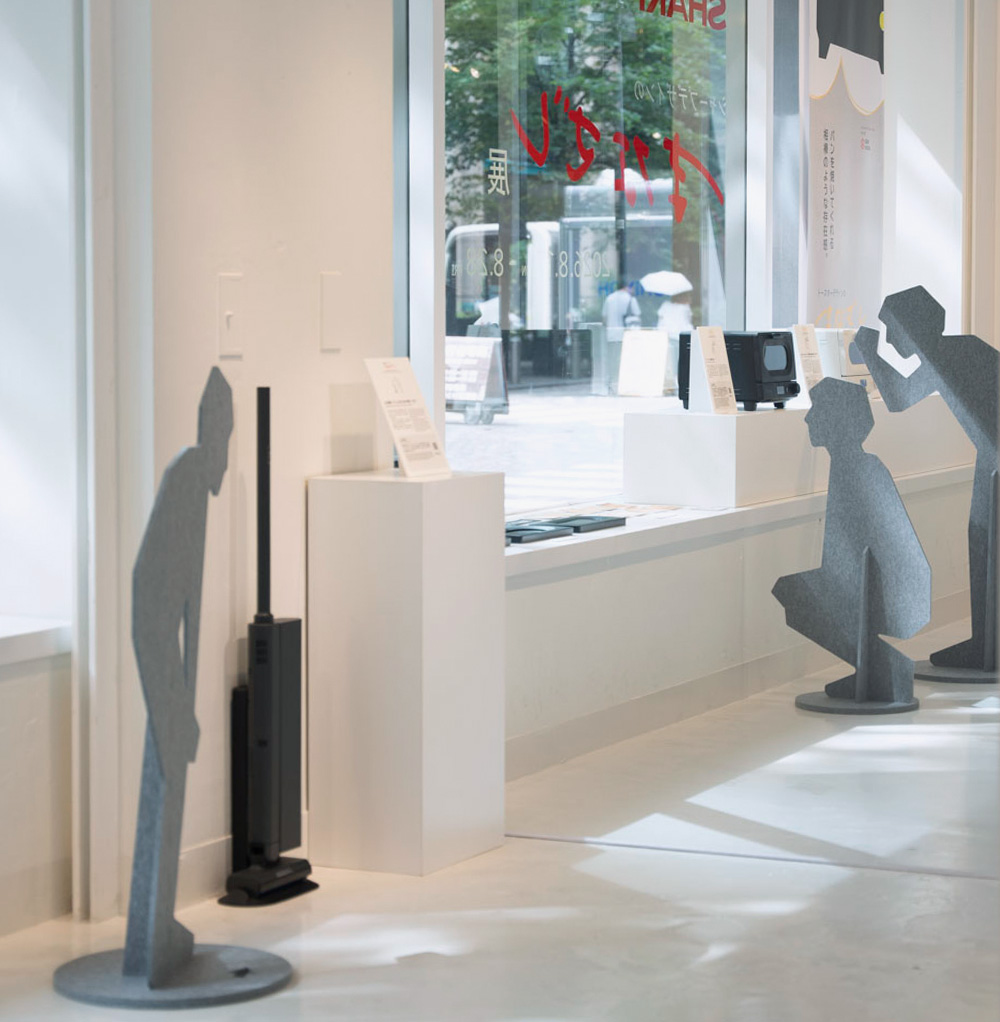
Ultimately, I concluded that visitors needed to feel curious and then be able to experience something firsthand.One example came from observing how television designers evaluate products. Rather than viewing a product only from the front, they look behind it, crouch down to inspect the speakers and stand, and carefully examine details from multiple angles. This is not how most people would look at products in an electronics store, but designers use these observations to understand how a product will be used, how it is constructed, and how it presents itself in a space.
To help visitors experience this perspective, we created life-sized silhouette panels that naturally encouraged them to look at the products in the same way designers do.
We also spent considerable time refining the visual expression of the exhibition. We wanted the space to feel welcoming and accessible, rather than resembling a typical electronics manufacturer display, so that a broader audience would feel comfortable visiting.
At the same time, because the exhibition represented Sharp Design, it needed to remain consistent with the overall brand tone used across our website and other communications. Working closely with members of our Communication Design team, we explored ways to align the exhibition's visual expression with its underlying message.
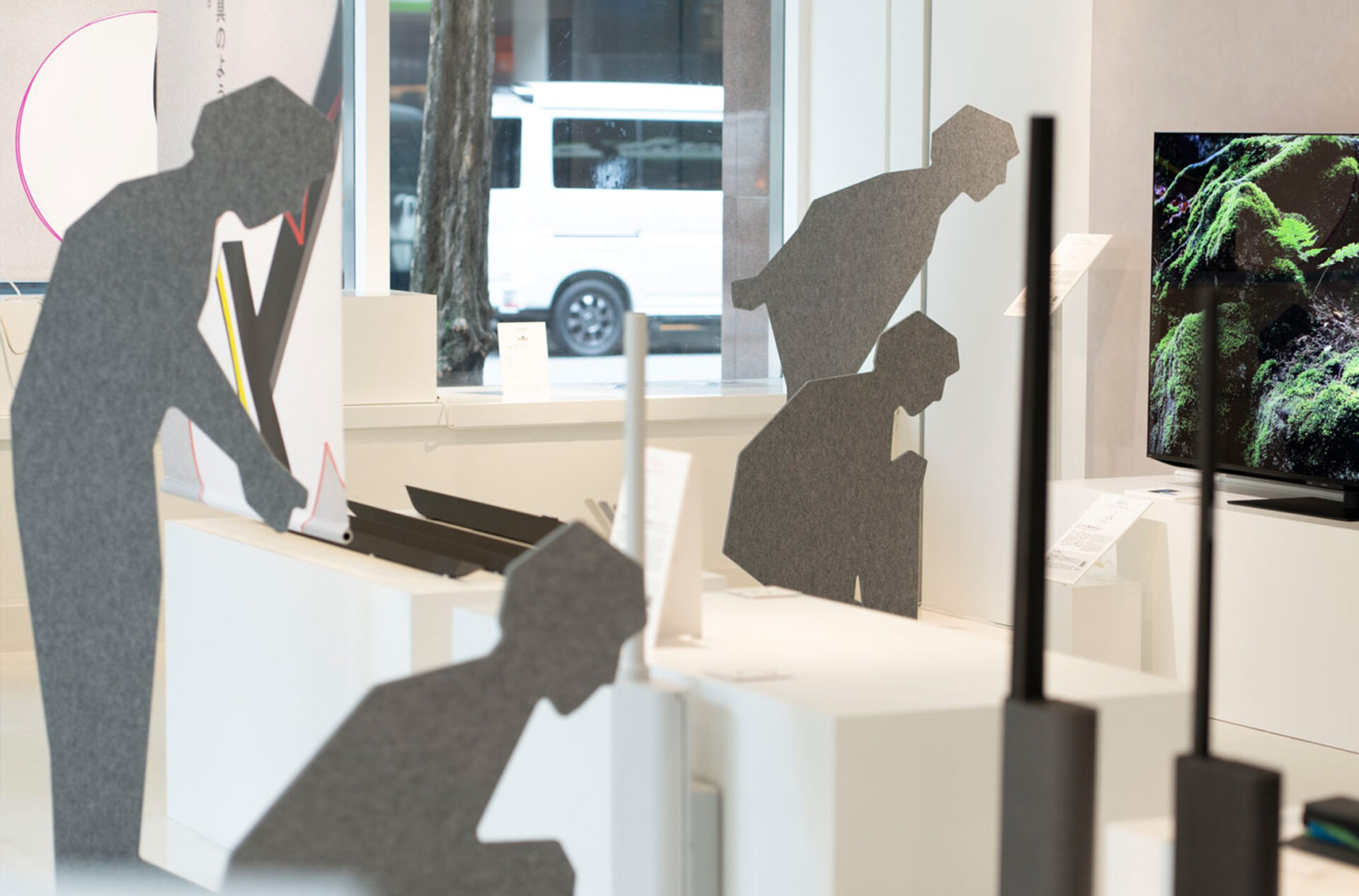
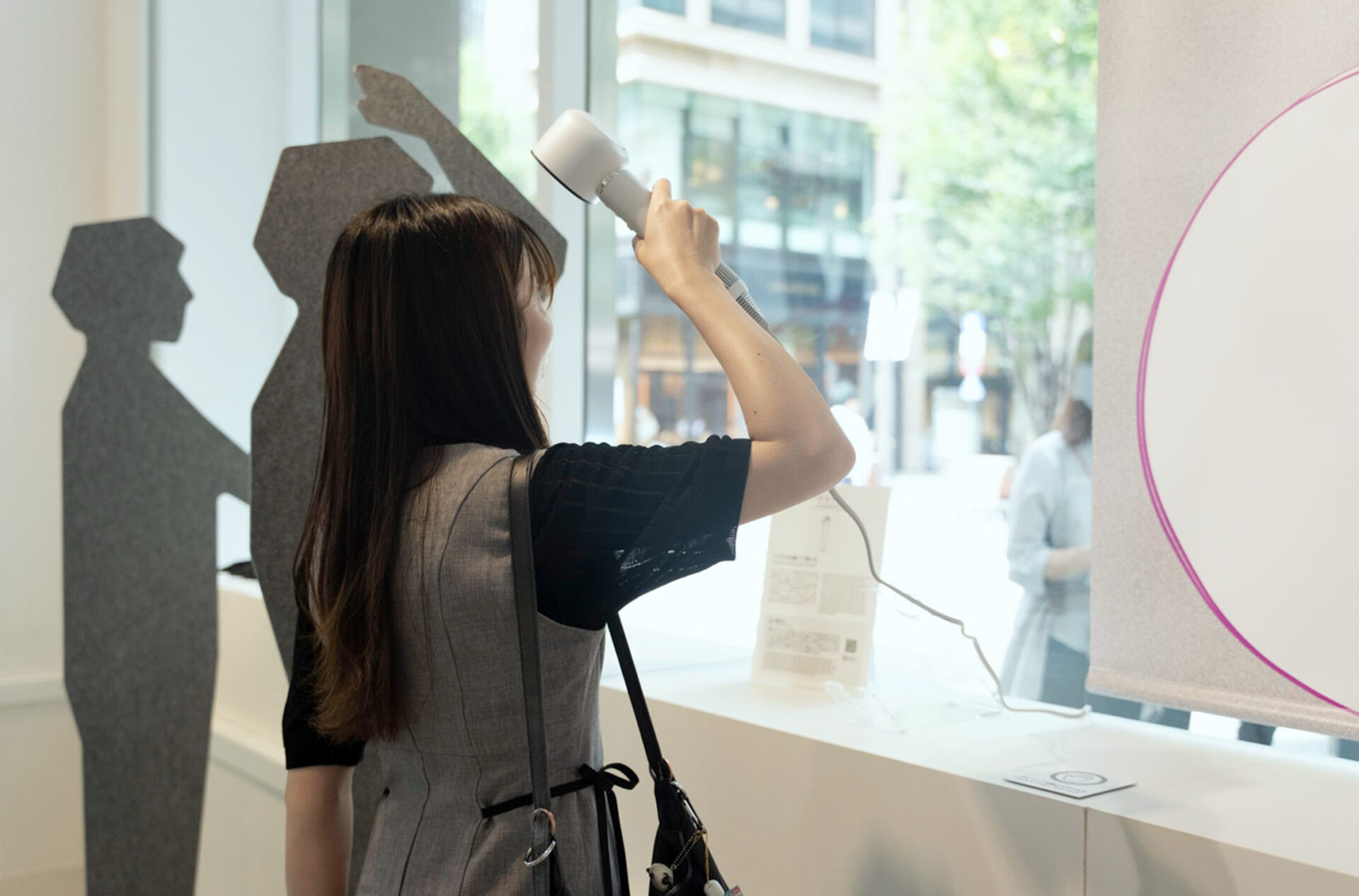
Life-sized silhouette panels encouraged visitors to experience products from a designer's point of view.
One of the most memorable reactions came from designers and design leaders at other companies. Many told us that simply carrying out this kind of initiative as a corporate activity was impressive in itself. Some visitors even returned multiple times.
It was encouraging to see that through the exhibition, visitors perceived Sharp as a company that thinks deeply about design.The responses also helped us recognize some of our own strengths. For example, in product development, we create numerous prototypes and refine ideas through ongoing discussions with engineers. Internally, this process feels completely natural, but feedback from visitors made us realize that it is actually a distinctive characteristic of the way we work.
Another memorable response was hearing people describe the exhibited products as "charming" or "simple, yet intriguing." Those comments made me feel that something distinctly Sharp is being communicated to visitors and customers alike.
While the exhibition was intended as an outward-facing communication effort, it also became an opportunity for us to better understand ourselves through the reactions of others.
When you put something out into the world, a great deal of input comes back in return. Experiencing that cycle firsthand was one of the most meaningful outcomes of the project, and I believe those insights will continue to inform our future product development and design activities.
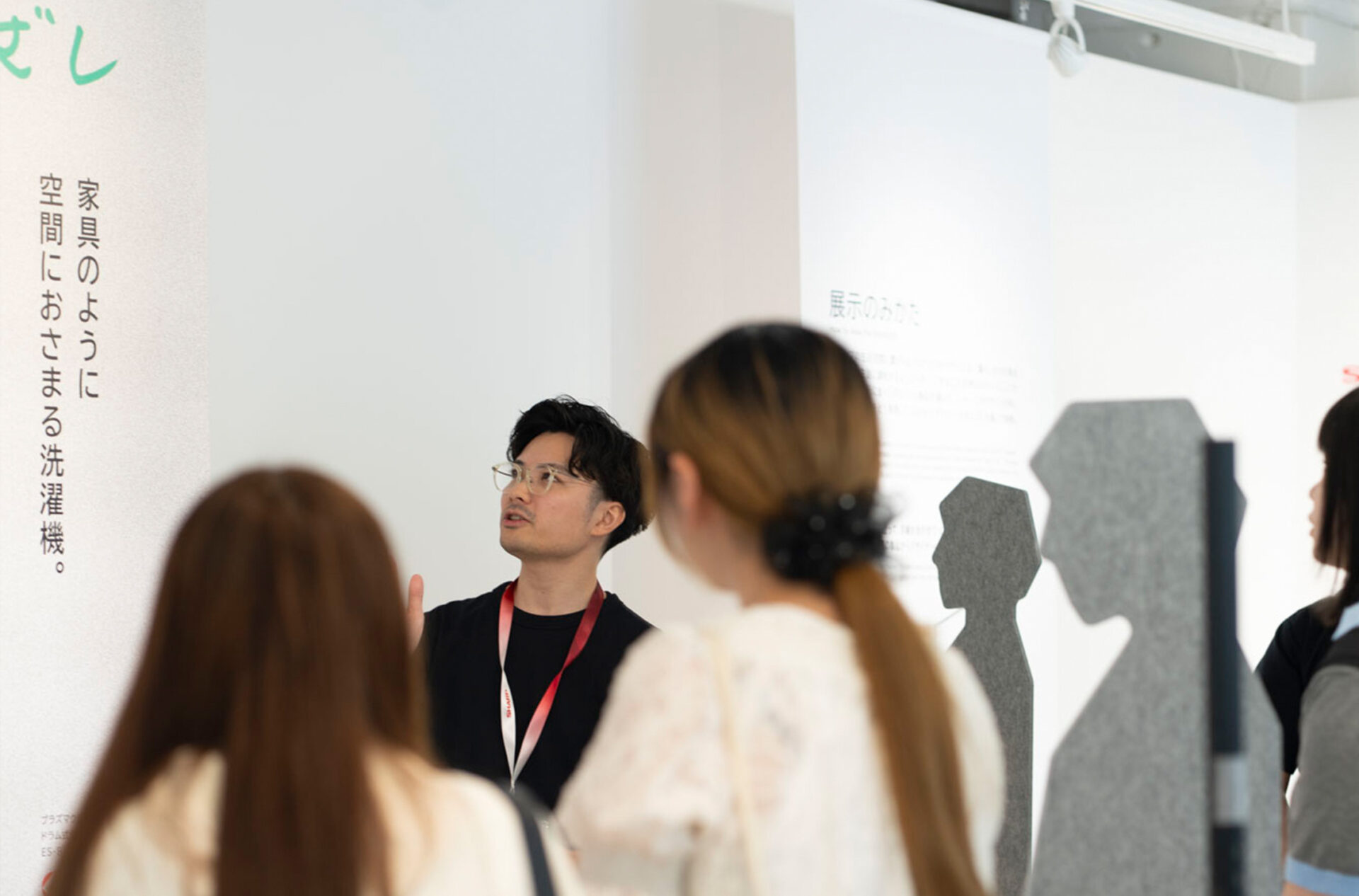
Furui actively engaged with visitors throughout the exhibition.
Looking back, I feel that this exhibition was a way of giving tangible form to the questions I have continued to explore since joining Sharp, as well as the experiences I have gained through activities outside my day-to-day work.
Going forward, I hope to apply what I learned from this experience to my core work in product design. Through my own activities, I want to have a positive impact on my fellow Sharp designers, the people I work with, and everyone connected to our design efforts.
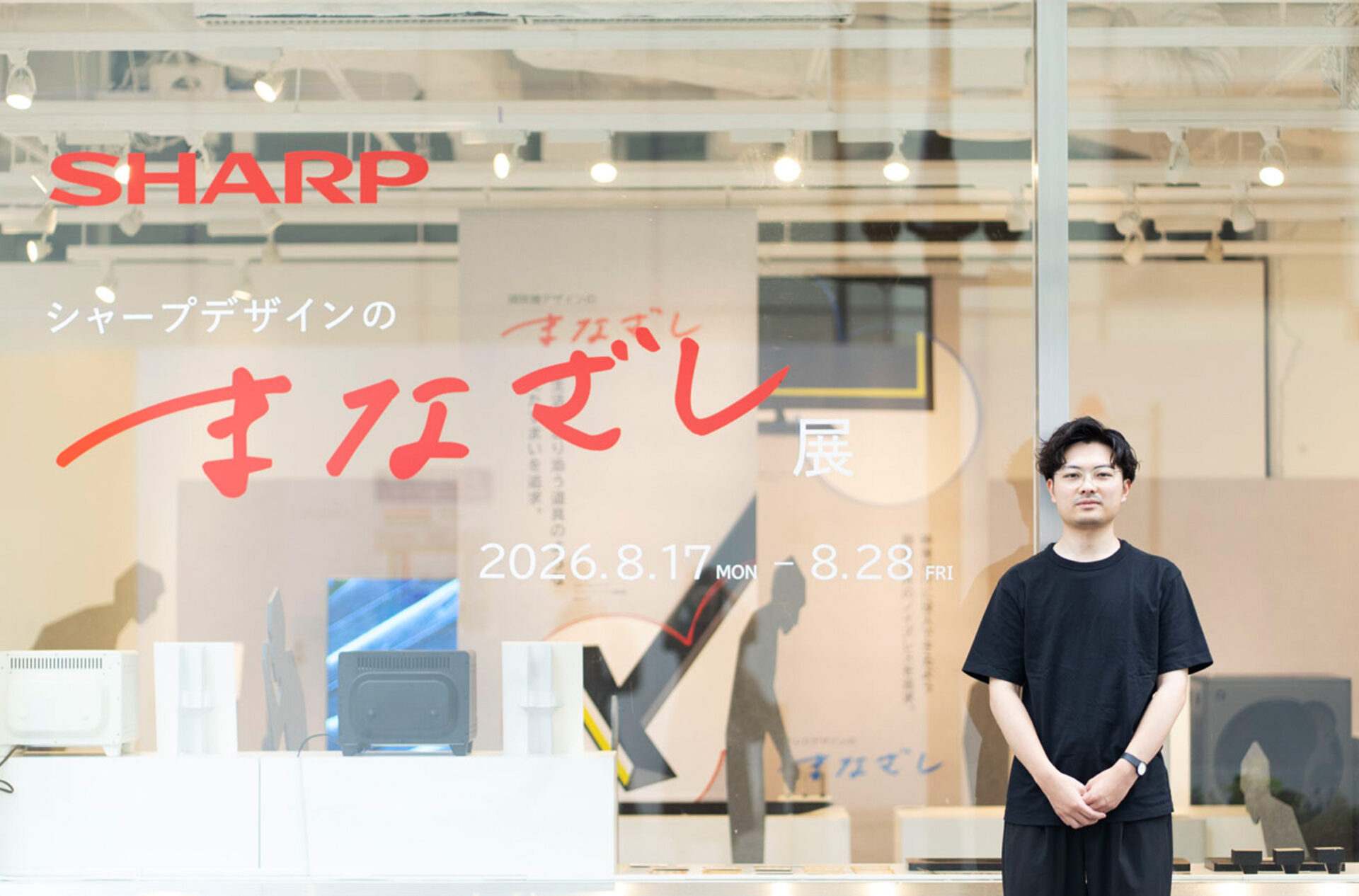
Interviewer: Keiko Matsuoka
Matsuoka is responsible for organizational design within Sharp's design division. She has contributed to the development of Sharp Design's new statement and principles of action, as well as the creation of the design division's website.